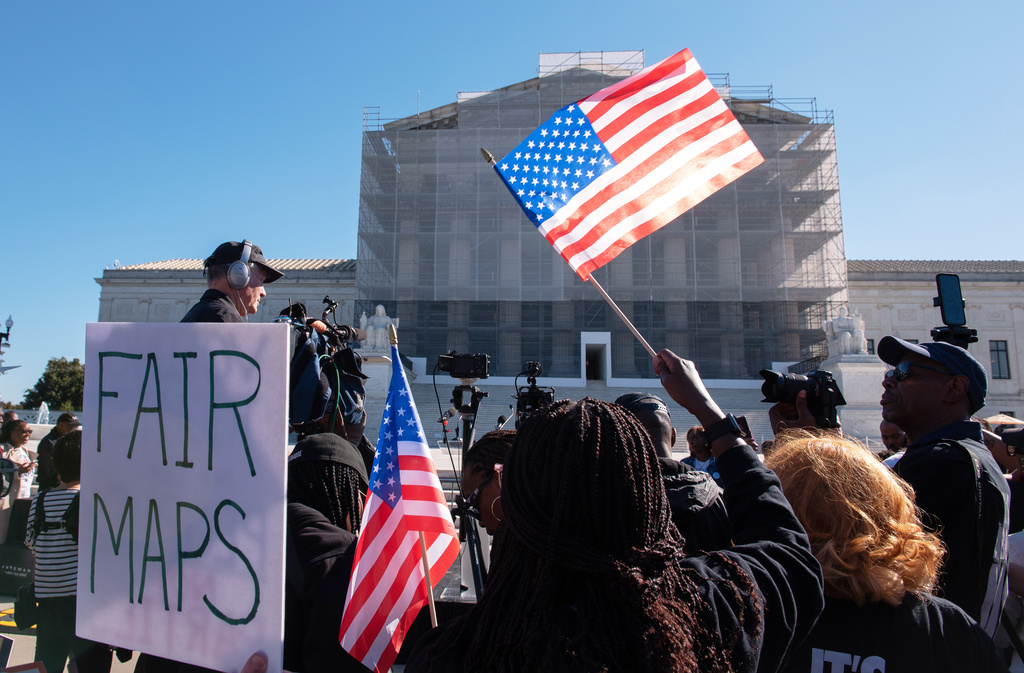
The Supreme Court is facing a new decision on how to proceed in a Louisiana redistricting case just days after the justices released an opinion that critics said weakened the Voting Rights Act. The court announced its decision in Louisiana v. Callais on Wednesday, ruling that a map drawn by the state was an unconstitutional racial gerrymander and that the Voting Rights Act did not require Louisiana to create an additional majority-minority district. Attorneys for Phillip Callais and other respondents in the initial Supreme Court case submitted an application on Wednesday asking the court to immediately issue its judgment and send a certified copy to a Louisiana district court. Under court rules, the clerk does not send a copy of a judgment to a district court for at least 32 days from the decision’s release, unless the court decides to expedite the process. Attorneys for several plaintiffs in the initial case, excluding Louisiana, filed a response on Thursday opposing the application and requesting that the court grant them the opportunity to seek a rehearing. Louisiana took no position on the application. “I think these requests are unusual, but this is not a usual case,” Neama Rahmani, a former federal prosecutor
Lean: n/a · Source quality n/a · Factual vs opinion n/a.
Christian Science Monitor · 3d
The Washington Times · 31h
© 2026 Vistoa. All rights reserved.
Limited excerpts, attribution, analysis, and outbound publisher links remain core product boundaries.