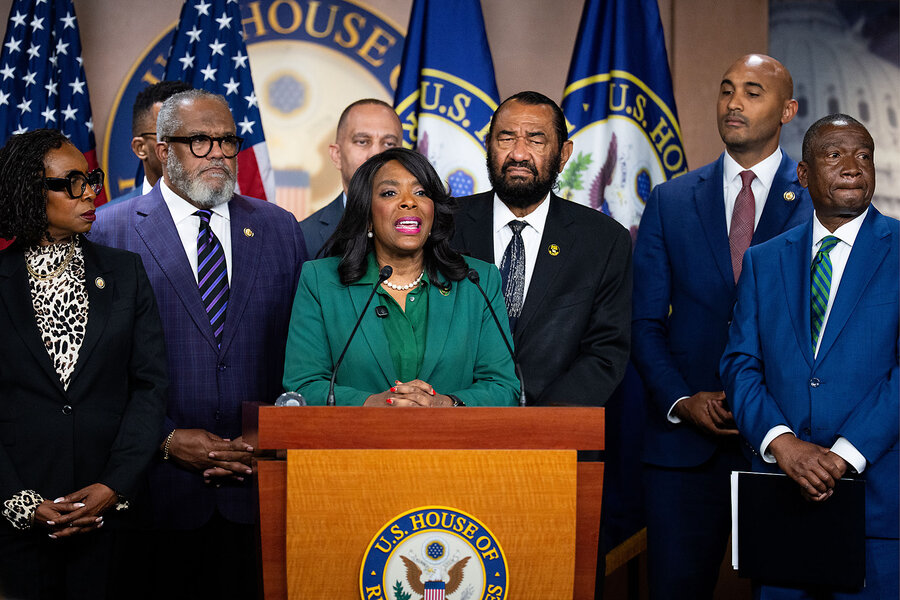
The Supreme Court’s 6-3 decision on Wednesday to sharply curtail the use of race in drawing electoral districts under the Voting Rights Act could carry big repercussions for political representation among minority communities, and appears certain to further ramp up partisan redistricting debates. But the timetable might be too tight for most states to redraw their maps before November’s elections.The ruling in Louisiana v. Callais struck down as unconstitutional a Black-majority congressional district in Louisiana. The decision was quickly seized upon by some Republicans as an opening to eliminate other safe Democratic seats in GOP-controlled states that had previously been protected under the landmark 1965 civil rights law. At least a dozen such House seats, many in the South, are seen as vulnerable, creating an opportunity for significant Republican gains. And it also appears likely to reduce the number of Black and Hispanic lawmakers in Congress, because the GOP conference is overwhelmingly white. Conservative legal scholars have long argued that drawing district lines to protect the voting power of racial minorities was a violation of constitutional safeguards against racial discrimination. On Wednesday, the court’s conservative majority agreed. While it did not wholly strike down Section 2 of the Voting Rights
Lean: n/a · Source quality n/a · Factual vs opinion n/a.
Christian Science Monitor · 3d
The Washington Times · 31h
© 2026 Vistoa. All rights reserved.
Limited excerpts, attribution, analysis, and outbound publisher links remain core product boundaries.