CriticalLead signal100% confidence13 min ago
Shooting at lake near Oklahoma City leaves at least 10 wounded, police say
Flashstack
Severity weighted live coverage
Topic
8 active clusters / 17 articles
Coverage spread
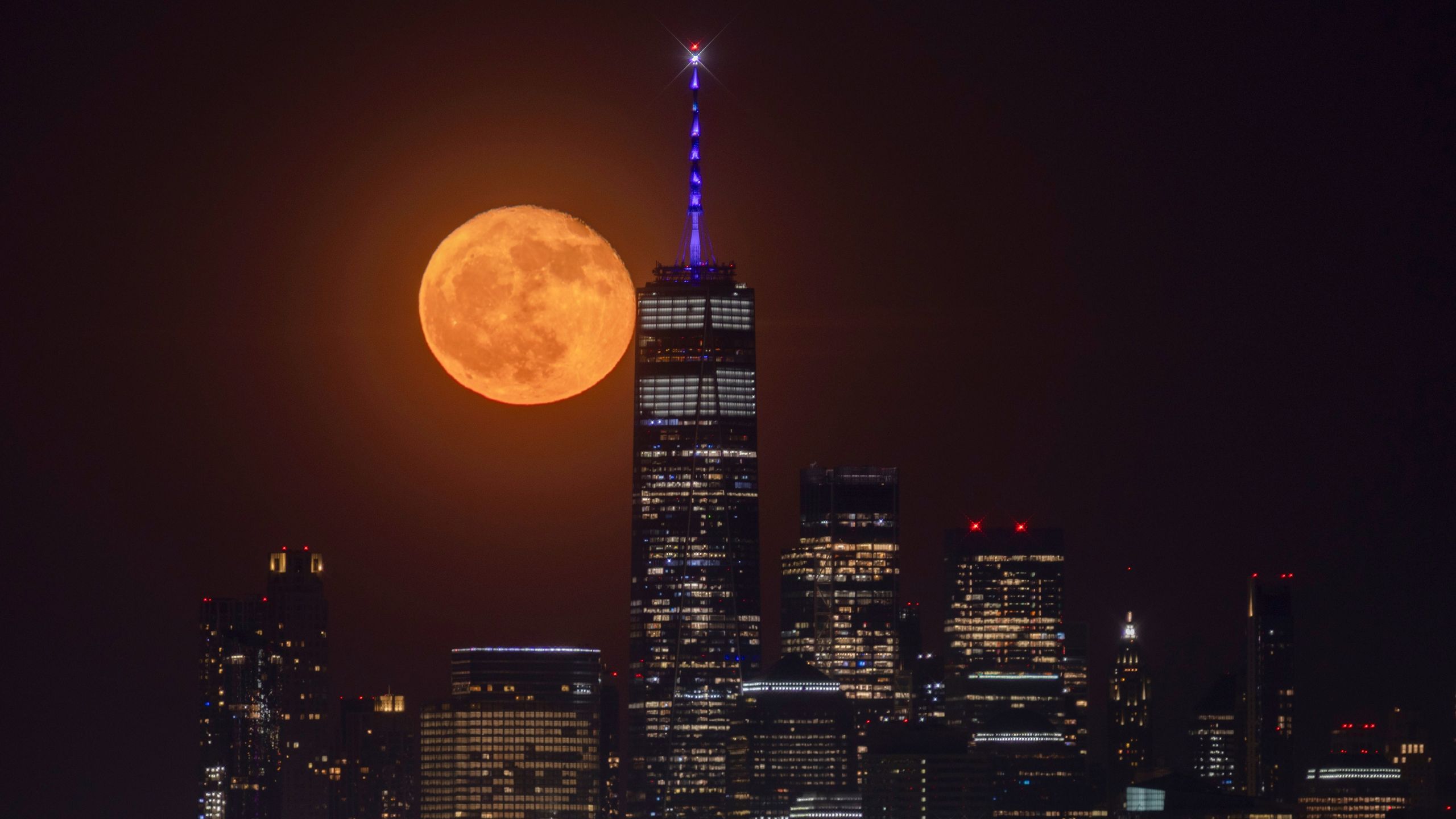
A Flower Moon is photographed rising over New York in May, 2024. (Image credit: Photo by Gary Hershorn/Getty Images) Editor's note: The full "Flower Moon" has come and gone, delighting skywatchers with a dazzling display of natural light as it climbed over the southeastern horizon on May 1. Check out our May 2026 full moon photo story to see the best pictures of the lunar extravaganza, captured from around the world.The moon will be 100% illuminated at 1:23 p.m. EDT (1723 GMT) on May 1 (local moonrise and moonset times depend on your location), as the lunar disk appears opposite the sun in our sky, fully lit by its rays. The May full moon is also known as the "Flower Moon" in reference to the plentiful blooms that appear around this time as the northern hemisphere slips deeper into spring.May's full moon will occur as the satellite is close to its most distant point from Earth in its near monthly elliptical orbit, giving rise to a "micromoon". Around this time, the moon may appear subtly smaller, while spanning 29.72 arcminutes — a unit used by astronomers to measure distances in the night sky — as opposed to its average size
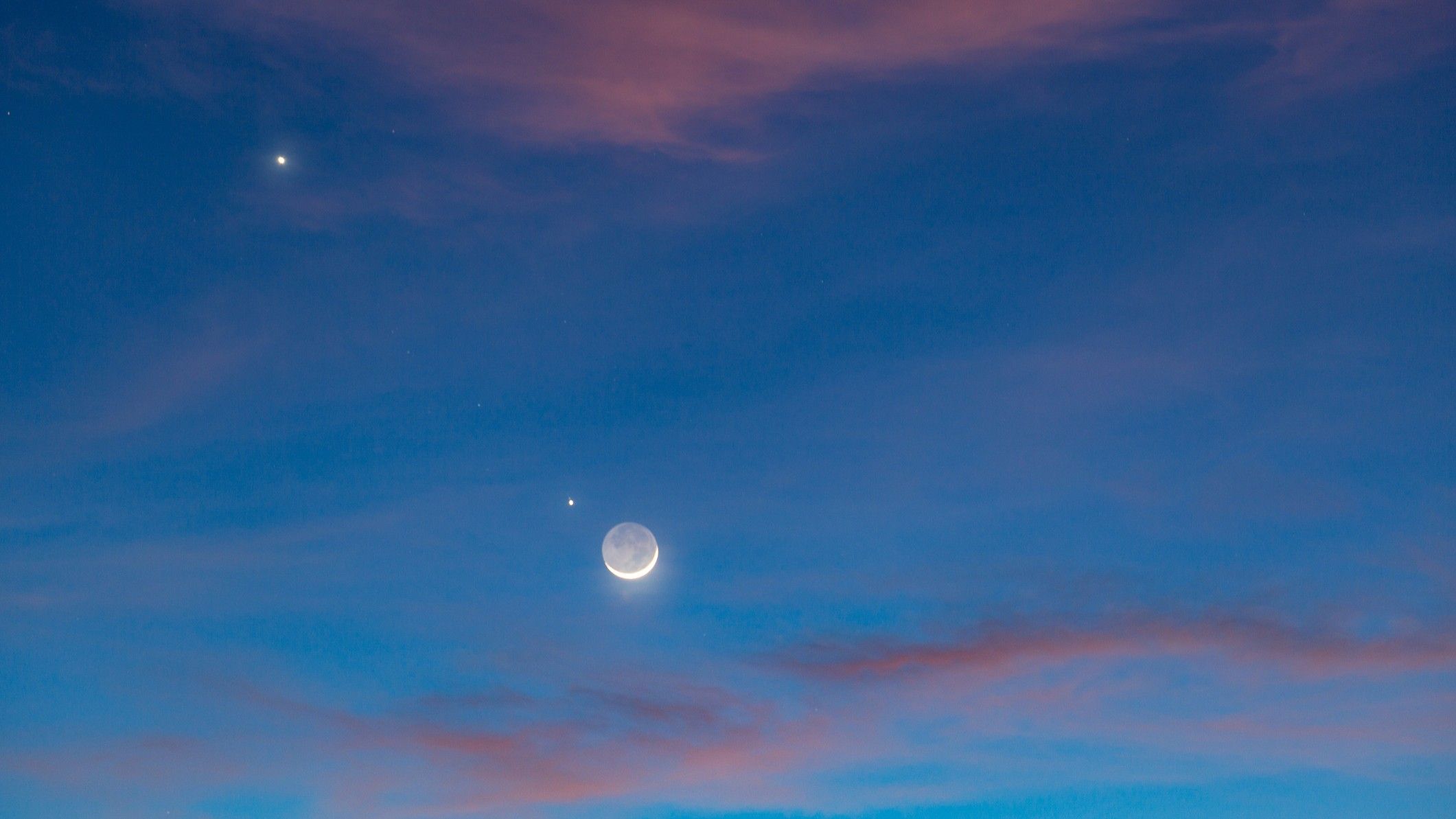
Venus, Jupiter and Mercury headline May's skywatching, with stunning moon pairings and a three-planet display. (Image credit: by Chakarin Wattanamongkol via Getty Images) The best planets to view this month are in the evening sky. Jupiter has been by far the best planet to observe both with the naked eye as well as through binoculars and telescopes these past several months, but its time is running out as it descends noticeably down the western sky during May. It continues to be placed near the "Twin Stars" of Gemini (Pollux and Castor) and the addition of a crescent moon passing by on May 20 makes for a rather attractive sky picture.Although lower in the western sky, Venus shines about seven times brighter than Jupiter, yet continues to be rather disappointing in telescopes. Its gibbous disk appears small and featureless. With the naked eye and especially through good binoculars, its conjunction with a slender crescent moon on May 18 will be very pleasing to see. Earthshine will make the view seem almost three-dimensional.Toward the end of the month, a third bright planet — Mercury — will begin to make its presence felt near the west-northwest horizon shortly after sunset.As far as Saturn
NEW YORK (AP) — The Eta Aquarid meteor shower soon will light the sky with debris from Halley’s comet. But a bright moon will spoil the fun this year, making the display harder to glimpse.The shower will peak Tuesday night into Wednesday morning. Viewers from the Southern Hemisphere typically see 50 meteors per hour during the peak, but the interfering moon could cut that number by half. In the north, skywatchers will likely see fewer than 10 per hour.“For us in the Northern Hemisphere, it’s not going to be as impressive,” said Teri Gee, manager of the Barlow Planetarium in Wisconsin. “The farther south you are, the better you’ll see it.”Meteor showers happen when the Earth charges through trails of debris left behind from comets or asteroids. Those bits collide with Earth’s atmosphere at extremely high speeds, producing streaks of light that are also known as shooting stars. On any given night, a handful of stray meteors are visible under dark skies. Meteor showers yield a more exciting show and happen at predictable times every year.Most meteor showers are caused by leftovers from comets, and the Eta Aquarids feature debris from one of the most well-known. Halley’s comet passes by
A Flower Moon is photographed rising over New York in May, 2024. (Image credit: Photo by Gary Hershorn/Getty Images) Editor's note: The full "Flower Moon" has come and gone, delighting skywatchers with a dazzling display of natural light as it climbed over the southeastern horizon on May 1. Check out our May 2026 full moon photo story to see the best pictures of the lunar extravaganza, captured from around the world.The moon will be 100% illuminated at 1:23 p.m. EDT (1723 GMT) on May 1 (local moonrise and moonset times depend on your location), as the lunar disk appears opposite the sun in our sky, fully lit by its rays. The May full moon is also known as the "Flower Moon" in reference to the plentiful blooms that appear around this time as the northern hemisphere slips deeper into spring.May's full moon will occur as the satellite is close to its most distant point from Earth in its near monthly elliptical orbit, giving rise to a "micromoon". Around this time, the moon may appear subtly smaller, while spanning 29.72 arcminutes — a unit used by astronomers to measure distances in the night sky — as opposed to its average size
Venus, Jupiter and Mercury headline May's skywatching, with stunning moon pairings and a three-planet display. (Image credit: by Chakarin Wattanamongkol via Getty Images) The best planets to view this month are in the evening sky. Jupiter has been by far the best planet to observe both with the naked eye as well as through binoculars and telescopes these past several months, but its time is running out as it descends noticeably down the western sky during May. It continues to be placed near the "Twin Stars" of Gemini (Pollux and Castor) and the addition of a crescent moon passing by on May 20 makes for a rather attractive sky picture.Although lower in the western sky, Venus shines about seven times brighter than Jupiter, yet continues to be rather disappointing in telescopes. Its gibbous disk appears small and featureless. With the naked eye and especially through good binoculars, its conjunction with a slender crescent moon on May 18 will be very pleasing to see. Earthshine will make the view seem almost three-dimensional.Toward the end of the month, a third bright planet — Mercury — will begin to make its presence felt near the west-northwest horizon shortly after sunset.As far as Saturn
NEW YORK (AP) — The Eta Aquarid meteor shower soon will light the sky with debris from Halley’s comet. But a bright moon will spoil the fun this year, making the display harder to glimpse.The shower will peak Tuesday night into Wednesday morning. Viewers from the Southern Hemisphere typically see 50 meteors per hour during the peak, but the interfering moon could cut that number by half. In the north, skywatchers will likely see fewer than 10 per hour.“For us in the Northern Hemisphere, it’s not going to be as impressive,” said Teri Gee, manager of the Barlow Planetarium in Wisconsin. “The farther south you are, the better you’ll see it.”Meteor showers happen when the Earth charges through trails of debris left behind from comets or asteroids. Those bits collide with Earth’s atmosphere at extremely high speeds, producing streaks of light that are also known as shooting stars. On any given night, a handful of stray meteors are visible under dark skies. Meteor showers yield a more exciting show and happen at predictable times every year.Most meteor showers are caused by leftovers from comets, and the Eta Aquarids feature debris from one of the most well-known. Halley’s comet passes by
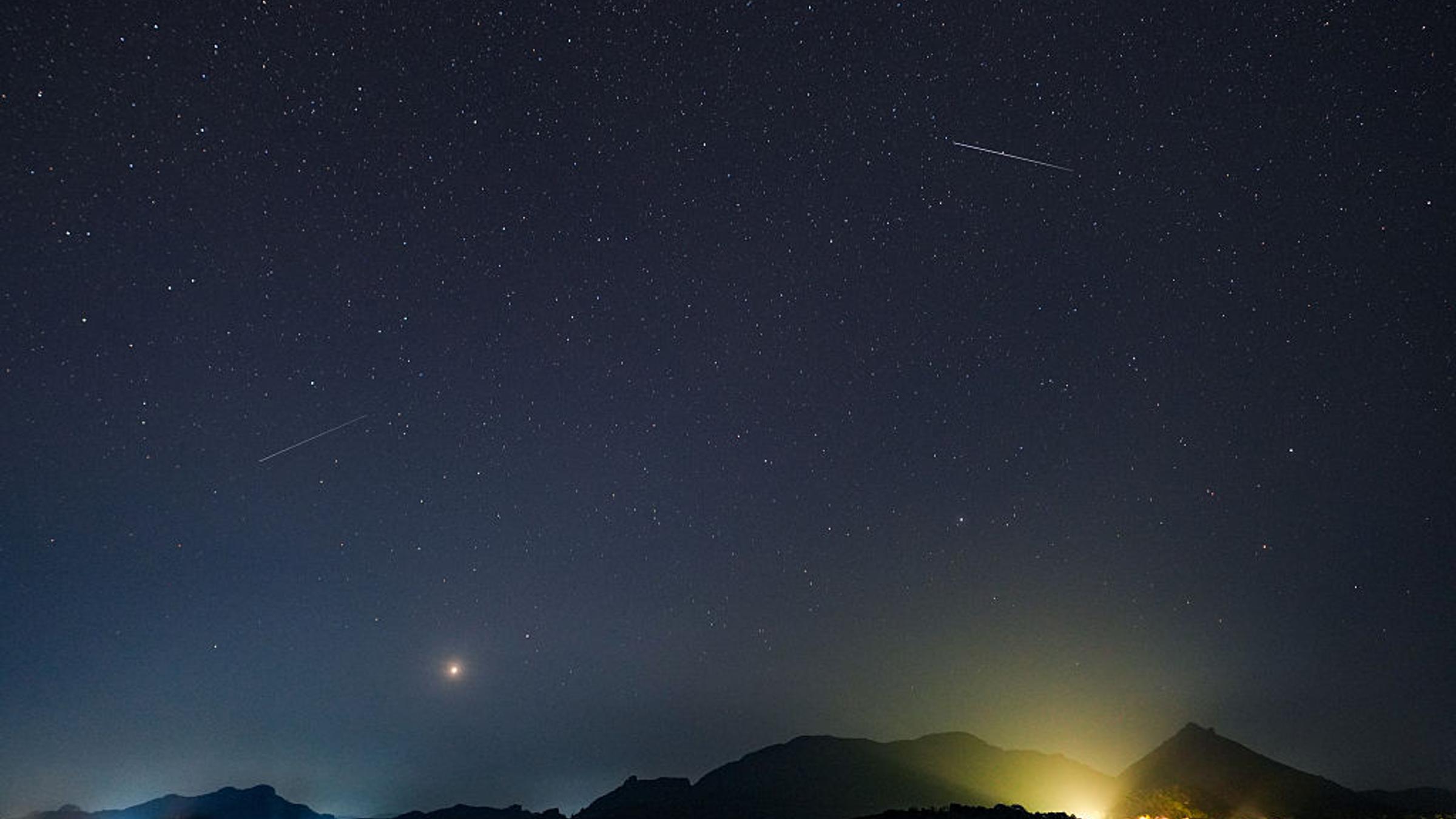
In just a few days, you could have the chance to see a meteor shower at its peak.The Eta Aquarid meteor shower started nearly two weeks ago, and will continue for most of this month. But the best opportunity you have to see the most meteors streaking across the sky will be next week.Here’s everything you need to know about the celestial phenomenon and how to watch it.What is the Eta Aquarid meteor shower?Often called “shooting stars” or “falling stars,” meteors are caused by space debris burning up as they travel through the Earth’s atmosphere, leaving streaks of light in the sky. You can see a few meteors each hour on a typical night under the right conditions. But meteor showers are special because you can see many more meteors in the same short time frame. During the peak of the Eta Aquarid meteor shower, for instance, you could see as many as 50 meteors per hour, according to NASA.The Eta Aquarid meteor shower starts in mid-April each year, and lasts until late May. The phenomenon is caused by debris from Halley’s comet that enters the Earth’s atmosphere.“Each time that Halley returns to the inner solar system its nucleus sheds
A required part of this site couldn’t load. This may be due to a browser extension, network issues, or browser settings. Please check your connection, disable any ad blockers, or try using a different browser.
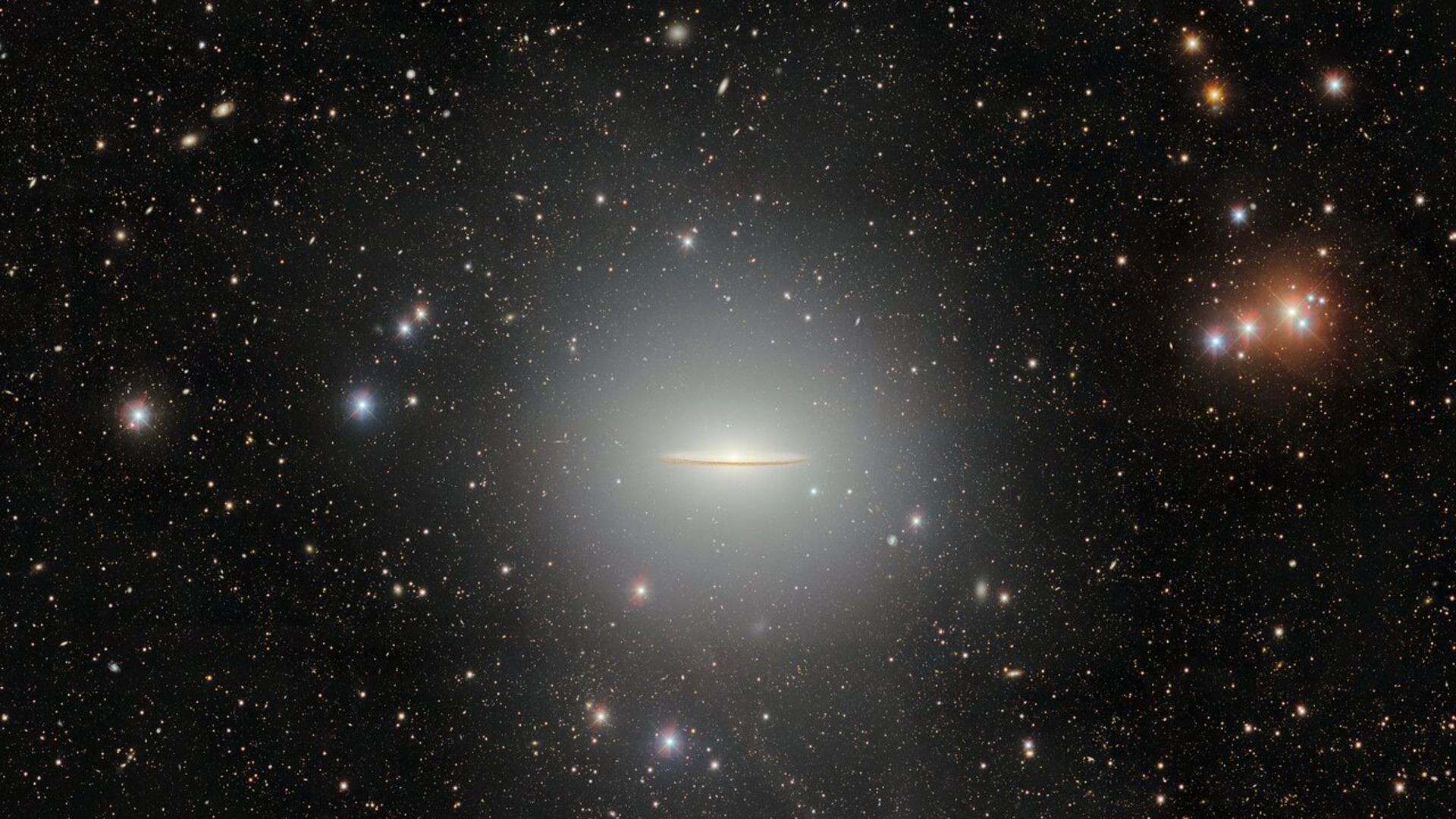
Quick factsWhat it is: Sombrero Galaxy (M104)Where it is: 30 million light-years away, in the constellations Virgo and CorvusWhen it was shared: April 24, 2026The central bulge and dark dust trail, which together resemble a traditional Mexican hat, give the Sombrero Galaxy (Messier 104, or M104) its nickname — but this new image of the galaxy from the powerful Dark Energy Camera reveals two never-before-seen features.What sets this image apart are features that are usually too faint to detect. Surrounding the galaxy in this wide-angle image is an enormous, diffuse halo that extends far beyond the bright disk, stretching over three times the width of the sombrero itself and significantly increasing the galaxy's apparent size.The image also captures a faint stellar stream stretching away from one side of the galaxy. This thin, curved feature is barely perceptible at first glance, but a closer inspection reveals it as a distinct arc of light beneath the galaxy as it's shown here. It breaks the galaxy's perfect symmetry and suggests past violent interactions with a smaller satellite galaxy.The remarkable clarity of the image is due to the capabilities of the Dark Energy Camera, a 570-megapixel instrument mounted on the Víctor M. Blanco 4-meter
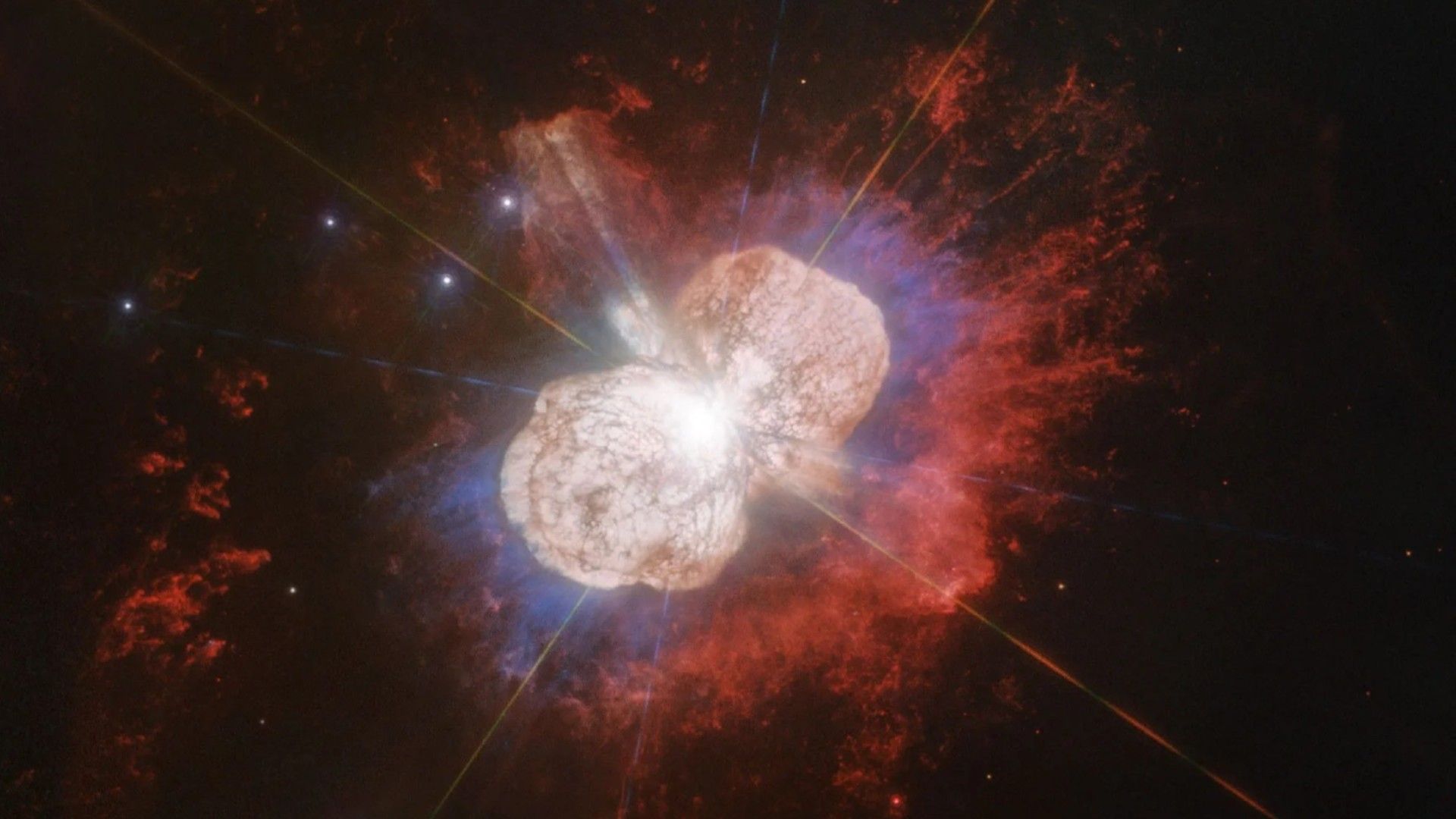
Historical records do show that about 170 years ago, the star Eta Carinae underwent an unusual outburst that made it one of the brightest stars in the southern sky. But it wasn't a supernova, it was a "supernova impostor." (Image credit: NASA, ESA, Hubble; Processing & License: Judy Schmidt) Staring up at the night sky, you might envision a star flaring up, burning thousands of times brighter than usual. That's a cosmic explosion — a supernova! Except it isn't. The star lives on.These violent, non-fatal eruptions can make a star mimic a true supernova — leading to what we affectionately call "supernova impostors."Trying to understand these supernova impostors is like trying to weigh a raging volcano's output without getting too close. We know it's important, but measuring how much material these stars eject, and what makes them do it, is surprisingly hard.Current ways of measuring mass loss from, say, infrared or radio observations, typically only show us what's happening right now. But these stars spit stuff out in fits and starts, not a steady stream. And when we try to average it all out across stellar populations, we lose the juicy details of individual star behavior.For decades, astronomers have concocted
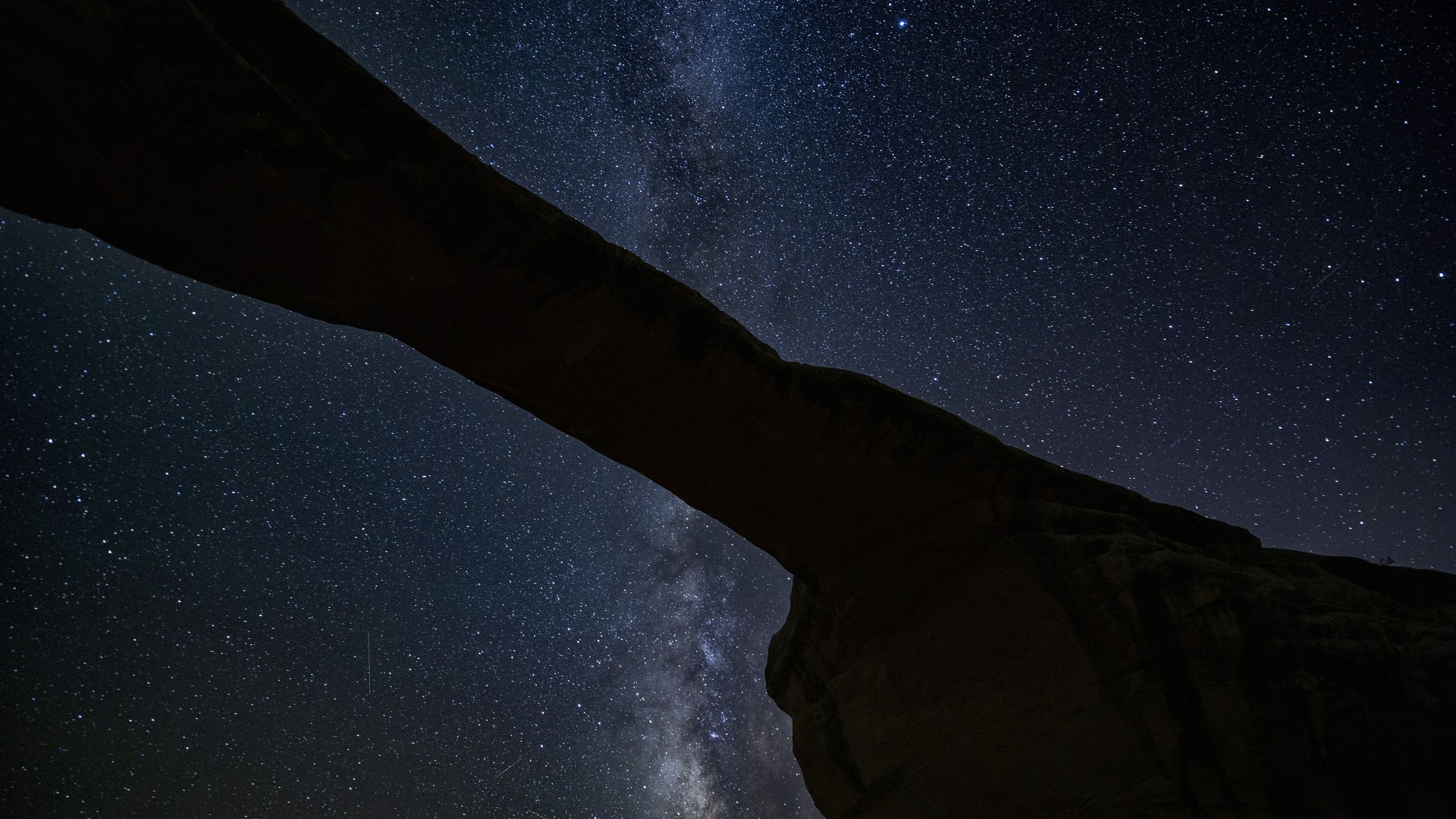
Owachomo Bridge and the Milky Way. (Image credit: Jamie Carter) A few years ago, a friend came back from Jordan in September and told me I'd got it wrong."I went to that desert you told me about but I didn't see many stars," he said.This was awkward. I'd been very specific. Wadi Rum is one of the best places on Earth for stargazing and to see the Milky Way — vast, dry, high and almost completely free of light pollution. I'd painted a picture of it: a river of starlight arching over the desert."I mean, there were stars," he added. "But no Milky Way. Just a really bright moon."And there it was.He hadn't gone to the wrong place. He hadn't gone in the wrong season — September is an ideal time to see the Milky Way. He'd gone during the "wrong" moon phase.Humans adore the full moon, but few appreciate how it changes the rest of the night sky. It's nature's biggest light polluter. There's really no point poring over light pollution maps or carefully choosing a Dark Sky Place if you ignore the phases of the moon, because if it's bright, it will overwhelm all but the brightest stars.Work