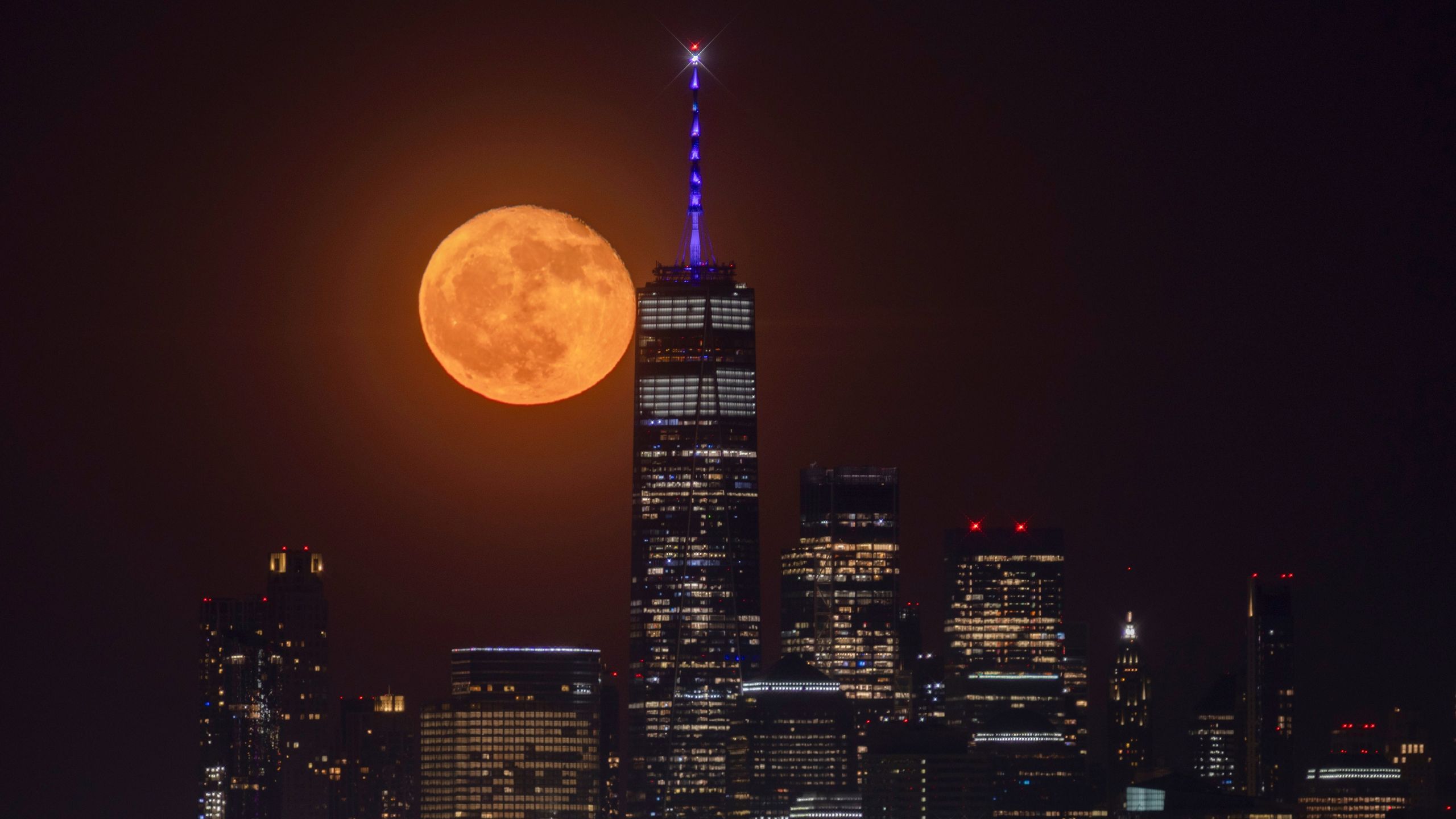
May's full 'Flower Moon' rises tonight: Here's what to expect from the 'micromoon'
Full coverage view across outlets, lean, source quality, and framing. Compare framing without algorithmic ranking.
No coverage from this perspective yet.
May's full 'Flower Moon' rises tonight: Here's what to expect from the 'micromoon'
A Flower Moon is photographed rising over New York in May, 2024. (Image credit: Photo by Gary Hershorn/Getty Images) Editor's note: The full "Flower Moon" has come and gone, delighting skywatchers with a dazzling display of natural light as it climbed over the southeastern horizon on May 1. Check out our May 2026 full moon photo story to see the best pictures of the lunar extravaganza, captured from around the world.The moon will be 100% illuminated at 1:23 p.m. EDT (1723 GMT) on May 1 (local moonrise and moonset times depend on your location), as the lunar disk appears opposite the sun in our sky, fully lit by its rays. The May full moon is also known as the "Flower Moon" in reference to the plentiful blooms that appear around this time as the northern hemisphere slips deeper into spring.May's full moon will occur as the satellite is close to its most distant point from Earth in its near monthly elliptical orbit, giving rise to a "micromoon". Around this time, the moon may appear subtly smaller, while spanning 29.72 arcminutes — a unit used by astronomers to measure distances in the night sky — as opposed to its average size
Full moon alert: May's Flower 'micromoon' will look extra small tonight, with a rare Blue Moon following
May's first full moon, known as the Flower Moon, will be 100% illuminated at 1:24 p.m. EDT Friday (May 1). Although that moment occurs during daylight hours for North America, the moon will appear full at night on Thursday, Friday and Saturday.As always, the most striking time to watch the full moon will be as it rises in the east. This month, that happens during dusk on May Day — which marks the halfway point between March's spring equinox and June's summer solstice in the Northern Hemisphere — when it rises shortly after sunset.This Flower Moon is this year's first micromoon, meaning it occurs when the moon is near apogee — its farthest point from Earth in its slightly elliptical orbit. The moon will be about 250,000 miles (402,000 kilometers) from Earth — around 5% farther away than average. As a result, it will appear slightly smaller and dimmer than usual. The difference is subtle, but it contrasts with the larger, brighter supermoons seen when the moon is closer to Earth. This year's supermoon season begins in November, with a particularly large supermoon on tap for Christmas Eve.Despite appearing relatively small, the Flower Moon will still look large when viewed
No coverage from this perspective yet.
Pro users see canonical claims across the cluster and which outlets reported each one.
Learn moreFirst seen
May 1, 2026
Latest
May 1, 2026
Outlets
2
Diversity
100/100
© 2026 Vistoa. All rights reserved.
Limited excerpts, attribution, analysis, and outbound publisher links remain core product boundaries.