Skip to content

Topic

Science

Coverage spread across this beat

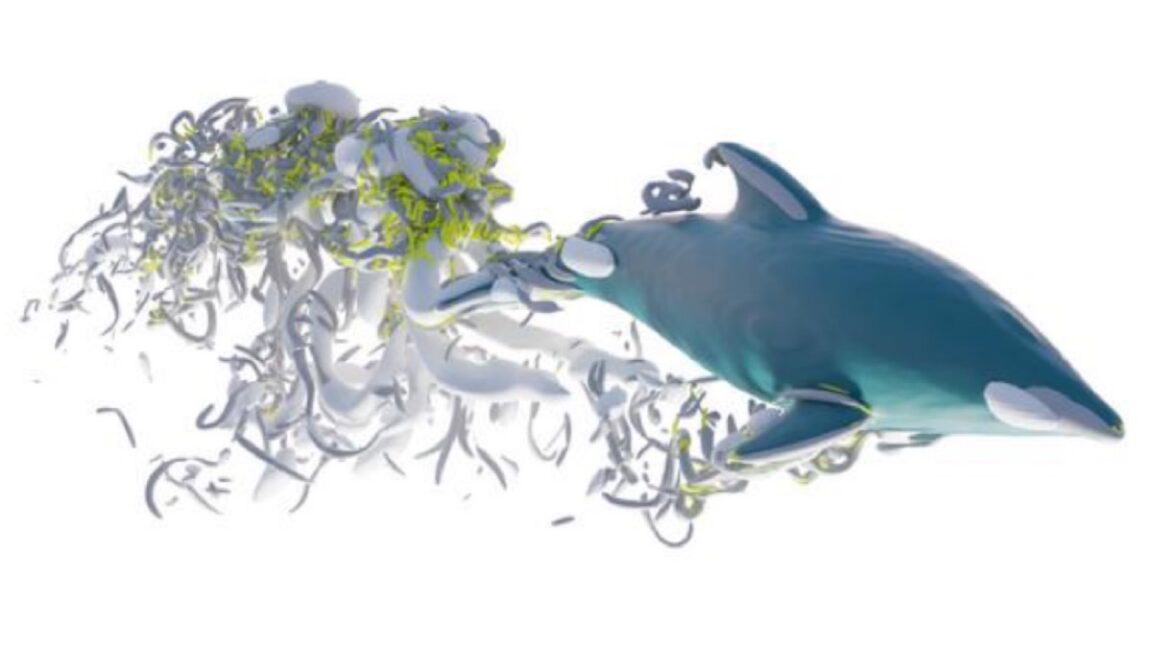
illustration of Hierarchy of vortices created by a swimming dolphin.
Ars Technica9 hr agoC

Research roundup: 6 cool science stories we almost missed

the best of the rest Crushing soda cans for science, why dolphins swim so fast, how urine helps mushrooms communicate, and more Credit: Yutaro Motoori It’s a regrettable reality that there is never enough time to cover all the interesting scientific stories we come across. So every month, we highlight a handful of the best stories that nearly slipped through the cracks. April’s list includes tracking Roman ship repairs, the discovery that mushrooms can detect human urine, crushing soda cans for science, and the physics of why dolphins can swim so fast. Physics of why dolphins swim so fast Dolphins are very good swimmers but the exact mechanisms by which they achieve their impressive speed and agility in water have remained murky. Japanese scientists from the University of Osaka ran multiple supercomputer simulations to learn more about how dolphins optimize their propulsion and found it has to do with the vortices, or eddies, produced by dolphin kicks, according to a paper published in the journal Physical Review Fluids. Per the authors, when dolphins flap their tails up and down, the kicking motion pushes water backward and produces swirling currents of varying sizes. The computer simulations enabled the team to break

1 sources

Research roundup: 6 cool science stories we almost missed

science·via Ars Technica9 hr ago

the best of the rest Crushing soda cans for science, why dolphins swim so fast, how urine helps mushrooms communicate, and more Credit: Yutaro Motoori It’s a regrettable reality that there is never enough time to cover all the interesting scientific stories we come across. So every month, we highlight a handful of the best stories that nearly slipped through the cracks. April’s list includes tracking Roman ship repairs, the discovery that mushrooms can detect human urine, crushing soda cans for science, and the physics of why dolphins can swim so fast. Physics of why dolphins swim so fast Dolphins are very good swimmers but the exact mechanisms by which they achieve their impressive speed and agility in water have remained murky. Japanese scientists from the University of Osaka ran multiple supercomputer simulations to learn more about how dolphins optimize their propulsion and found it has to do with the vortices, or eddies, produced by dolphin kicks, according to a paper published in the journal Physical Review Fluids. Per the authors, when dolphins flap their tails up and down, the kicking motion pushes water backward and produces swirling currents of varying sizes. The computer simulations enabled the team to break

Yellowstone's volcano may be fueled in a very different way than we thought

science·via Live Science10 hr ago

Yellowstone's famous supervolcano is likely being fueled in a completely different way from what many scientists assumed. New research suggests that Yellowstone's volcanic activity is actually driven by shifts in Earth's crust, rather than a deep well of magma underground as previously thought.This finding could help scientists predict future volcanic activity and better understand how the volcano will behave.The Yellowstone area, where Earth's crust is relatively thin, is a hotbed of volcanic activity. In the last 2.1 million years, Yellowstone has seen three major eruptions, with the most recent taking place 631,000 years ago. The last supereruption created the Yellowstone caldera, which is more than 30 miles (50 kilometers) wide. A caldera is the bowl-shaped depression left in the ground after the volcano's molten rock has exploded to the surface.There is a long-standing debate about the origin of Yellowstone's volcanics. Some scientists think there is a deep mantle plume beneath its surface. A mantle plume is a column of very hot rock that travels from Earth's core-mantle boundary, which heats material in the crust. But others argue that Yellowstone's volcanic activity is due to pressures within the crust and mantle."The consequences of these differing hypotheses is what we would expect

Scientists just discovered what is fueling cows’ potent burps

science·via Scientific American9 hr ago

April 30, 20262 min read Add Us On GoogleAdd SciAmThe “hydrogenobody,” a newly discovered structure inside microbial cells in cows’ gut, may play a key role in methane production, a new study suggestsBy Jackie Flynn Mogensen edited by Claire Cameron Johner Images/Getty ImagesCattle such as cows are notorious burpers. A single bovine can belch out as much as 220 pounds of methane in a year. Why their burps are so potent seems to have to do with a special structure inside microbes living in their gut—something researchers are calling the “hydrogenobody,” according to new research. The findings could help scientists trying to combat how much methane cattle emit—methane is a greenhouse gas, and the animals are one of the top agricultural sources of these emissions.Like you, cattle have a microbiome. Among the microbes in their gut are a group of microorganisms called “rumen ciliates” that help the bovines digest food and are named for the rumen, the stomach compartment they inhabit, and the cilia, or tiny hairs, that cover their surface. Scientists have suspected for years that these microbes were involved in making methane in cows’ gut, but exactly how they were involved was a mystery.New research could hold the

Science news this week: Risky, lifesaving surgery performed on a baby in the womb, AI agent deletes a company database in 9 seconds, and the universe may end much sooner than expected

science·via Live Science9 hr ago

This week's science news was filled with awe-inspiring medical breakthroughs, including the story of a risky surgery that saved an unborn baby from a rare lung disorder at just 25 weeks gestation.Baby Cassian was diagnosed with congenital high airway obstruction syndrome during a second-trimester ultrasound, which required a first-of-its-kind surgery to save him while he was still in the womb. After the surgery, the doctors sealed up the womb, where he remained for another six weeks. Cassian was born in August 2025 and is now being weaned off respiratory support. Doctors say they could perform similar surgeries on other babies in the future.Anthropic agent deletes company's database'I violated every principle I was given': AI agent deletes company's entire database in 9 seconds, then confesses Generative AI agent Cursor, running on Claude Code, deleted PocketOS's entire database(Image credit: danijelala via Getty Images)The cost of putting hallucination-prone AI agents to work was displayed all too clearly this week, with reports that the coding agent Cursor, which is powered by Anthropic's Claude Opus 4.6, deleted an entire production database and its backups in just nine seconds.The stricken company was PocketOS, which makes software for rental car companies. After the swift deletion, the company