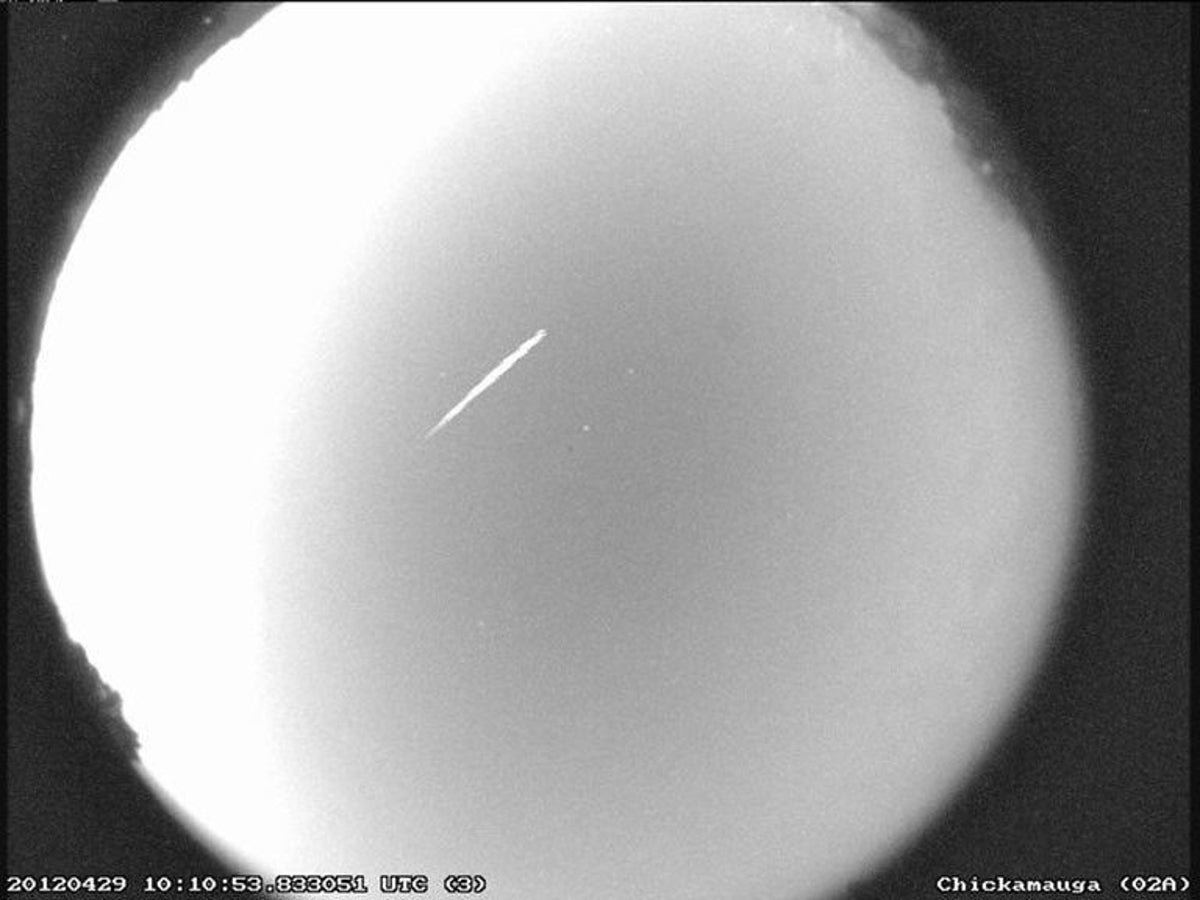
This annual meteor shower occurs as Earth passes through the dusty debris left behind by Halley’s Comet as it journeys around the sunBy Adam Kovac edited by Claire Cameron NASA/MSFC/B. CookeIt’s May, which means the trees are greener, the days are longer, and the nights are a little warmer. That’s perfect for spotting a meteor shower—and not just any shower: the Eta Aquarids are hitting their peak this week on May 5 and May 6.Meteor showers are the beautiful product of cosmic debris. As Earth orbits the sun, it passes through a trail of dust and rocks falling from asteroids and comets as they, too, make their way around the star. When this debris hits Earth’s atmosphere, it burns up, creating bright shooting stars that appear to streak across the sky.The Eta Aquarids, also called the Eta Aquariids, get their name from the point in the sky that they appear to originate from—an area near Eta Aquarii, the brightest star in the Aquarius constellation. But the meteors are actually generated by Halley’s Comet, which is also known as Comet 1P/Halley. It takes its name from astronomer and mathematician Edmond Halley, a friend of Isaac Newton. In 1705 Halley published a
Lean: 0.000 · Source quality 65/100 · Factual vs opinion 86/100.
Scientific American · 2h
© 2026 Vistoa. All rights reserved.
Limited excerpts, attribution, analysis, and outbound publisher links remain core product boundaries.