CriticalLead signal100% confidence14 min ago
Shooting at lake near Oklahoma City leaves at least 10 wounded, police say
Flashstack
Severity weighted live coverage
Topic
8 active clusters / 10 articles
Coverage spread

We're sorry, but something went wrong while fetching your podcast feeds. Please contact us at plus@slate.com for help. Episode Notes Dahlia Lithwick reviews what has been an “exceptionally bad week” for American democracy. Former U.S. Attorney Barbara McQuade explains why the charges against former FBI director James Comey, rooted in the claim that he threatened to kill President Trump – via the medium of seashells on Instagram – are unlikely to stick, no matter how hard Trump’s Acting (and actively auditioning) Attorney General Todd Blanche tries. A deleted insta post from a beach in North Carolina is just not going to meet the Supreme Court’s true-threat standard as laid out in Counterman v Colorado. But actually, landing a conviction is not the point, McQuade says –– Blanche has learned from Trump’s longstanding legal playbook that he can always win by losing. And that’s why she is also closely watching the DOJ’s indictment of the Southern Poverty Law Center under a dubious fraud theory, warning that Blanche is both more skilled and more ruthless in using prosecutions for political ends, with few accountability mechanisms beyond potential disbarment. McQuade’s new book, The Fix: Saving America from the Corruption of a Mob-Style Government

OPINION: When it comes to Supreme Court justices, one of the lesser known is Samuel Alito. But he’s truly the voice of constitutional influence on the High Court, cutting through the complex and alerting his fellow justices to what’s really at stake in each of the cases. So says Mollie Hemingway, author of the new and best-selling “Alito: The Justice Who Reshaped the Supreme Court and Restored the Constitution,” a book that takes readers behind the scenes to reveal the personality, humility, and genius of one of the George w. Bush appointee. One of Alito’s greatest talents is he’s able to remain principled in the face of pragmatic and oft-divisive politics, she said. And one of Hemingway’s greatest revelations in her book is the disgraceful way in which Justice Elena Kagan delayed release of the Hobbs v. Jackson ruling — dealing with Roe v. Wade — and in so doing, imperiled her fellow justices, particularly Brett Kavanaugh, who faced death threats from the leaked opinion. For more with Mollie Hemingway on Alito and the Supreme Court and the fallout from the recent Voting Rights Act case, tune in. And don’t forget to subscribe to the Bold and Blunt podcast and
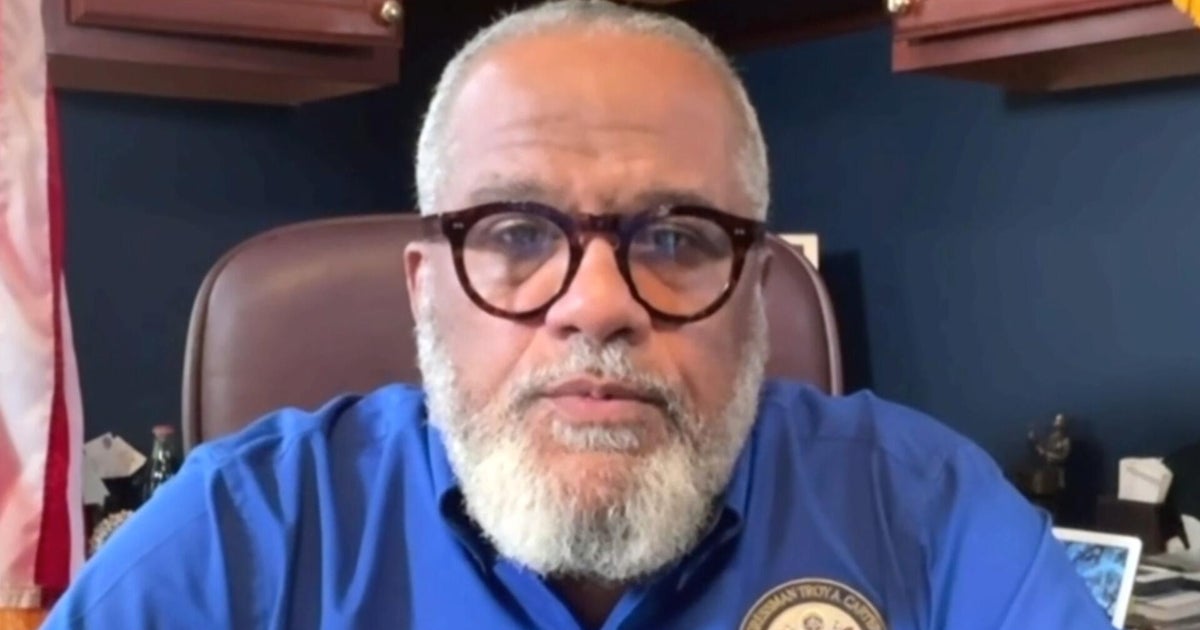
Louisiana is suspending its May 16 House primaries following the Supreme Court's decision to strike down its congressional map. The high court found the state relied too heavily on race when it created a second majority-Black district. Democratic Rep. Troy Carter of Louisiana joins "The Takeout" to discuss the ruling.
We're sorry, but something went wrong while fetching your podcast feeds. Please contact us at plus@slate.com for help. Episode Notes Dahlia Lithwick reviews what has been an “exceptionally bad week” for American democracy. Former U.S. Attorney Barbara McQuade explains why the charges against former FBI director James Comey, rooted in the claim that he threatened to kill President Trump – via the medium of seashells on Instagram – are unlikely to stick, no matter how hard Trump’s Acting (and actively auditioning) Attorney General Todd Blanche tries. A deleted insta post from a beach in North Carolina is just not going to meet the Supreme Court’s true-threat standard as laid out in Counterman v Colorado. But actually, landing a conviction is not the point, McQuade says –– Blanche has learned from Trump’s longstanding legal playbook that he can always win by losing. And that’s why she is also closely watching the DOJ’s indictment of the Southern Poverty Law Center under a dubious fraud theory, warning that Blanche is both more skilled and more ruthless in using prosecutions for political ends, with few accountability mechanisms beyond potential disbarment. McQuade’s new book, The Fix: Saving America from the Corruption of a Mob-Style Government
OPINION: When it comes to Supreme Court justices, one of the lesser known is Samuel Alito. But he’s truly the voice of constitutional influence on the High Court, cutting through the complex and alerting his fellow justices to what’s really at stake in each of the cases. So says Mollie Hemingway, author of the new and best-selling “Alito: The Justice Who Reshaped the Supreme Court and Restored the Constitution,” a book that takes readers behind the scenes to reveal the personality, humility, and genius of one of the George w. Bush appointee. One of Alito’s greatest talents is he’s able to remain principled in the face of pragmatic and oft-divisive politics, she said. And one of Hemingway’s greatest revelations in her book is the disgraceful way in which Justice Elena Kagan delayed release of the Hobbs v. Jackson ruling — dealing with Roe v. Wade — and in so doing, imperiled her fellow justices, particularly Brett Kavanaugh, who faced death threats from the leaked opinion. For more with Mollie Hemingway on Alito and the Supreme Court and the fallout from the recent Voting Rights Act case, tune in. And don’t forget to subscribe to the Bold and Blunt podcast and
Louisiana is suspending its May 16 House primaries following the Supreme Court's decision to strike down its congressional map. The high court found the state relied too heavily on race when it created a second majority-Black district. Democratic Rep. Troy Carter of Louisiana joins "The Takeout" to discuss the ruling.

The Supreme Court hears oral arguments in Temporary Protected Status cases, and some justices pretend race isn’t real. Episode Notes With much of the attention focused on Wednesday’s catastrophic ruling in Louisiana v. Callais, which effectively gutted the Voting Rights Act, lots of people may have missed the other horrific news out of SCOTUS on the same day. Also on Wednesday, the Supreme Court heard oral arguments in cases challenging Temporary Protected Status for people from Haiti and Syria. Dahlia Lithwick is joined by Madiba Dennie to break down the sheer racism behind the Trump administration’s efforts to deport TPS recipients, and how some justices simply…pretended race couldn’t possibly be relevant to these cases. “I can’t see race” and “I won’t see race” are very different things! For more from Madiba, read her on TPS in Balls & Strikes: “The Supreme Court Did Not Want to Talk About Trump’s Long History of Gutter Racism.” This episode is member-exclusive. Listen to it now by subscribing to Slate Plus. By joining, not only will you unlock weekly bonus episodes of Amicus—you’ll also access ad-free listening across all your favorite Slate podcasts. You can subscribe directly from the Amicus show page on Apple
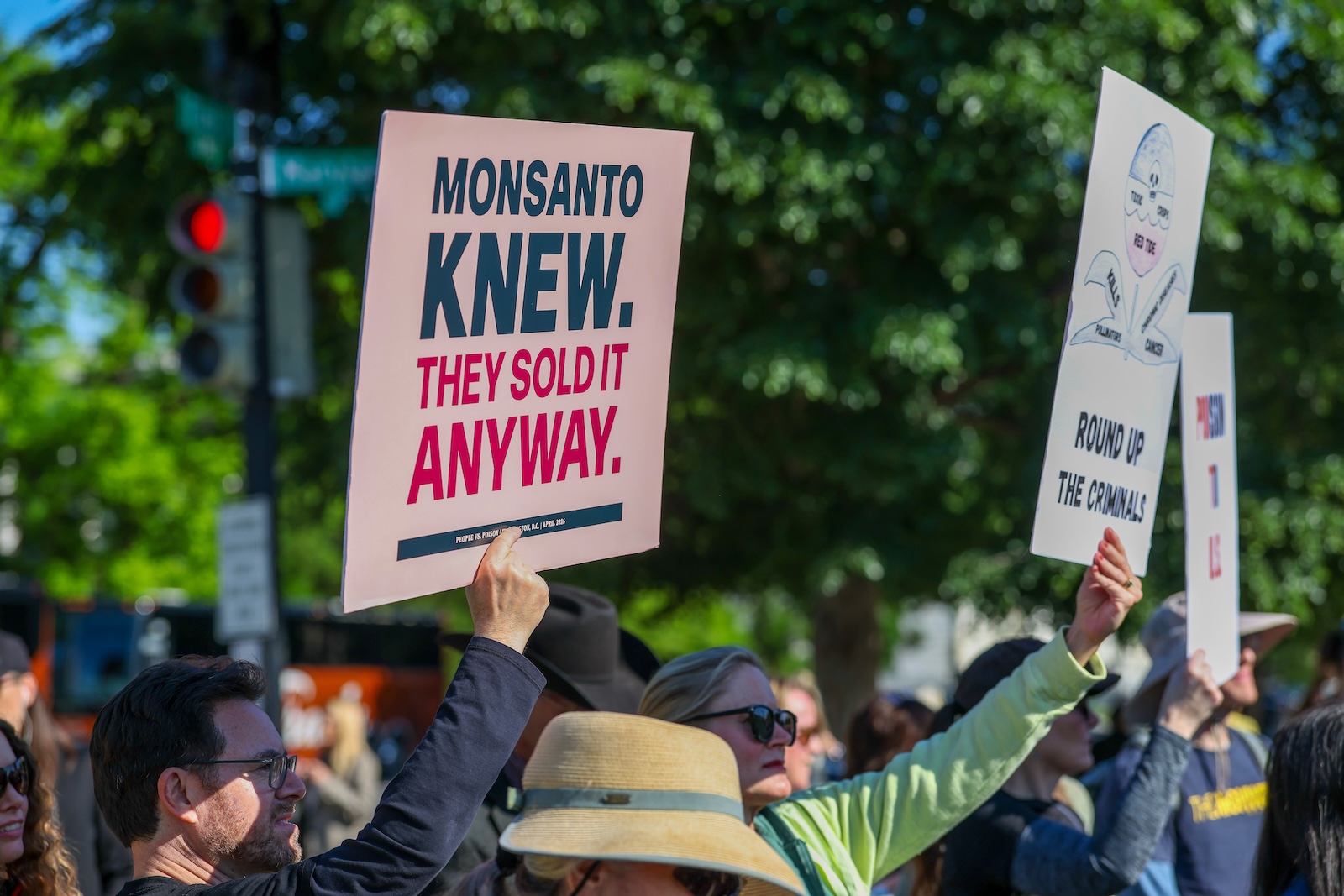
Since 2018, when it bought the chemical manufacturer Monsanto, the German conglomerate Bayer has set aside billions to settle legal claims that the active ingredient in the company’s weedkiller Roundup has caused cancer and other health issues among its users. More than 100,000 plaintiffs across the U.S. have filed lawsuits alleging a cancer link, and in February the company agreed to settle a class-action lawsuit for $7.25 billion. Last week, the Supreme Court heard oral arguments in one case that didn’t reach a settlement. John Durnell first sued Monsanto in 2019, arguing that he developed non-Hodgkin lymphoma because of persistent exposure to glyphosate in Roundup, which he had regularly sprayed throughout his neighborhood for twenty years. In 2023, the Missouri jury found Monsanto liable for failing to warn users of the cancer risk from glyphosate, and awarded Durnell $1.25 million in damages. The company has denied the claims and issued a series of appeals ever since. Under the Federal Insecticide, Fungicide, and Rodenticide Act — known as FIFRA — the Environmental Protection Agency is authorized to govern the sale and labeling of pesticides. The federal law bars pesticides that are “misbranded,” or lack warnings that may be necessary to protect

Video Ad Feedback "This is just Jim Crow 2.0" Rep. Bennie Thompson reacts to Voting Rights ruling Democratic Representative Bennie Thompson talks to CNN's Victor Blackwell about the Supreme Court ruling that struck down a key part of the Voting Rights Act of 1965. 4:33 • Source: CNN Latest News from CNN Politics 15 videos Video Ad Feedback "This is just Jim Crow 2.0" Rep. Bennie Thompson reacts to Voting Rights ruling 04:33 Now playing • Source: CNN Video Ad Feedback Former Rep. Barney Frank warns Democrats against 'litmus tests' 02:39 Now playing • Source: CNN Video Ad Feedback Former Congressman Barney Frank reflects on his life, entering hospice, and the future of the Democratic Party 12:15 Now playing • Source: CNN Video Ad Feedback US Attorney Jeanine Pirro shares new details on alleged press dinner shooter 12:53 Now playing • Source: CNN Video Ad Feedback Pirro on press dinner suspect: 'It is definitively his bullet' in vest of Secret Service officer 01:24 Now playing • Source: CNN Video Ad Feedback Pirro on now-suspended probe of Jerome Powell: 'I want to see what's there.' 01:52 Now playing • Source: CNN Video Ad Feedback DC US Attorney Jeanine Pirro: WHCD shooting

As the Supreme Court was barreling toward the final weeks of its term last year, Chief Justice John Roberts made a rare public appearance to defend his colleagues from criticism that they were all too eager to kick decades-old precedent to the curb. Still bruising from anger on the left over the court’s monumental decision three years earlier to overturn Roe v. Wade, Roberts rattled off a series of stats underscoring that his court — the Roberts court — had taken aim at far fewer precedents than any of its modern predecessors, an average of less than two “overrulings” each year. “I think people have a misunderstanding about how much the current court is overruling precedent,” Roberts told an audience at Georgetown University Law Center. But just 10 days after he walked offstage, the Supreme Court let stand President Donald Trump’s firing of two senior labor officials despite a 1935 precedent known as Humphrey’s Executor that for decades has protected the leaders of independent agencies from dismissal by a president without cause. Critics of the Supreme Court’s blockbuster decision Wednesday gutting a key provision of the Voting Rights Act of 1965 and voiding a Louisiana congressional map say the court
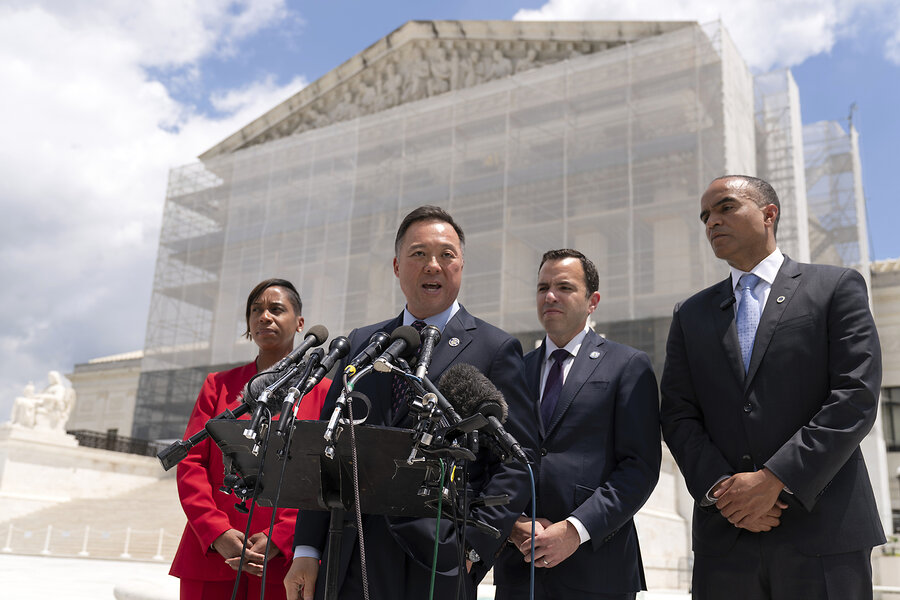
In a controversial decision, the U.S. Supreme Court on Friday sided with the Trump administration as it limited the power of federal judges to issue nationwide procedural rulings. The high court granted the administration’s request to scale back nationwide injunctions. It also partially green-lit, for now, a Trump policy that seeks to change who can be born American.In a press conference after the ruling, President Donald Trump praised the court. The 6-3 decision – which divided the justices along ideological lines – is a “monumental victory” that is “based on common sense,” he said. He singled out Justice Amy Coney Barrett, one of his appointees and the author of the majority opinion, for writing a “brilliant” decision.To supporters, Friday’s decision represents a common-sense effort to dial back the injunctions and judge-shopping that both parties have decried in recent years. For critics, it erodes constitutional protections and presents “an existential threat to the rule of law,” as one dissenting justice put it. Why We Wrote This To supporters, Friday’s decision represents a commonsense effort to dial back the injunctions that both parties have decried. For critics, it erodes constitutional protections and presents “an existential threat to the rule of law.” The