CriticalLead signal100% confidence3 hr ago
Shooting at lake near Oklahoma City leaves at least 10 wounded, police say
Flashstack
Severity weighted live coverage
Topic
4 active clusters / 6 articles
Coverage spread
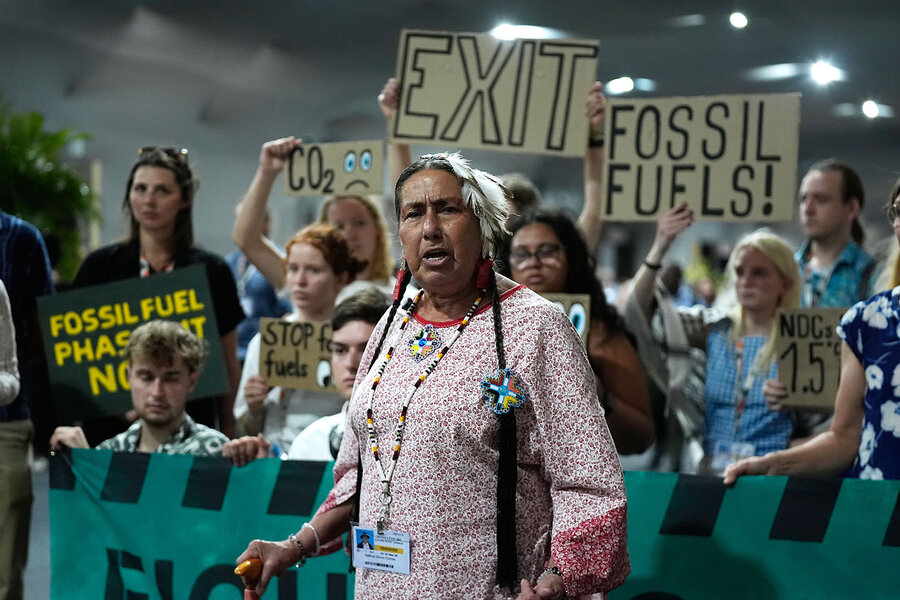
More than 40,000 delegates from nearly 200 countries are getting down to work this week in the Brazilian city of Belém, on the edge of the Amazon rainforest, for what is looking like an increasingly forlorn task: to slow and mitigate the overheating of our planet.But while their work at the 2025 United Nations Climate Change Conference, commonly known as COP30, certainly matters, this latest gathering comes amid a dramatic shift – along with an improbable glimmer of hope – in the politics of climate change.Whether, and how, the world adopts clean energy technologies – replacing carbon-heavy oil, gas, and coal – has come to depend less on these annual get-togethers than on the domestic political agendas of each individual nation. Why We Wrote This As the COP30 climate conference gathers in Brazil, Beijing and Washington have taken opposing positions on climate change. Donald Trump calls it a “con.” Xi Jinping has invested billions this year on green tech. Whose view will prove more prescient? And no nations matter more than two energy superpowers with diverging interests, and with increasingly divergent approaches to climate change: the United States and China.U.S. President Donald Trump recently branded climate change “the greatest con

Featured From yield impacts to just transformation of food systems Food security remains a major global challenge, which is only amplified by ongoing climate change. Here, I look back on a 2015 paper on climate change impacts on wheat and discuss subsequent research on agriculture and food security. Latest Research and Reviews Direct electrochemical appraisal of black coffee quality using cyclic voltammetry Coffee flavor is primarily determined by the bean roast color and concentration of the beverage. Here, the authors show that both of these characteristics are reflected in the coffee’s cyclic voltammogram. This approach enables rapid determination of the strength and roast intensity of the coffee. Robin E. BumbaughDoran L. PenningtonChristopher H. Hendon Plasticity of source-sink dynamics contributes to wheat yield stability Improving winter wheat adaptation to climate change is a critical challenge. This study suggests that improving source–sink plasticity and optimizing stage-specific sensitivity to short-term temperature fluctuations are key strategies for crop resilience. Tien-Cheng WangAnna MoritzTsu-Wei Chen News and Comment Comments & Opinion30 Apr 2026 Nature From yield impacts to just transformation of food systems Food security remains a major global challenge, which is only amplified by ongoing climate change. Here, I look back on a 2015 paper
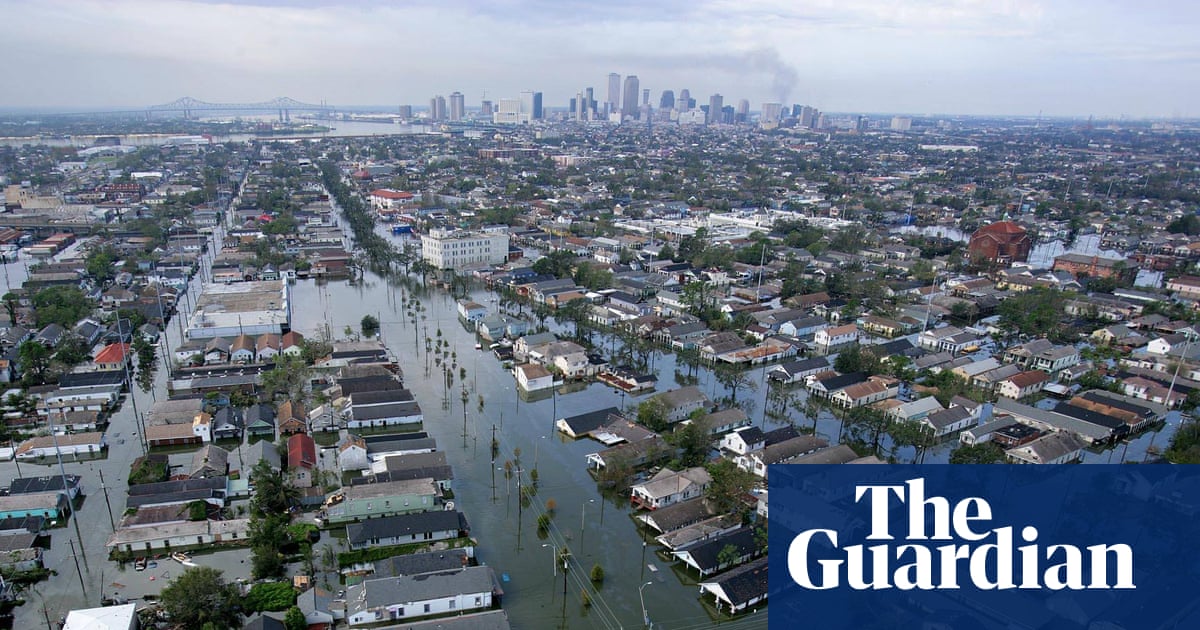
The process of relocating people from New Orleans should start immediately as the city has reached a “point of no return” that will see it surrounded by the ocean within decades due to the climate crisis, a stark new study has concluded.Ongoing sea level rise and the rampant erosion of wetlands in southern Louisiana will swallow up the New Orleans area within a few generations, with the new paper estimating the city “may well be surrounded by the Gulf of Mexico before the end of this century”.Low-lying southern Louisiana faces multiple threats, with rising sea levels driven by global heating, compounded by strengthening hurricanes, also a feature of the climate crisis, and the gradual subsidence of a coastline that has been carved apart by the oil and gas industry.Southern Louisiana is facing 3-7 metres of sea level rise and the loss of three-quarters of its remaining coastal wetlands, which will cause the shoreline “to migrate as much as 100km (62 miles) inland”, thereby stranding New Orleans and Baton Rouge, according to the study, which compared today’s rising global temperatures with a period of similar heat 125,000 years ago that caused a rise in sea level.This scenario makes the region the
More than 40,000 delegates from nearly 200 countries are getting down to work this week in the Brazilian city of Belém, on the edge of the Amazon rainforest, for what is looking like an increasingly forlorn task: to slow and mitigate the overheating of our planet.But while their work at the 2025 United Nations Climate Change Conference, commonly known as COP30, certainly matters, this latest gathering comes amid a dramatic shift – along with an improbable glimmer of hope – in the politics of climate change.Whether, and how, the world adopts clean energy technologies – replacing carbon-heavy oil, gas, and coal – has come to depend less on these annual get-togethers than on the domestic political agendas of each individual nation. Why We Wrote This As the COP30 climate conference gathers in Brazil, Beijing and Washington have taken opposing positions on climate change. Donald Trump calls it a “con.” Xi Jinping has invested billions this year on green tech. Whose view will prove more prescient? And no nations matter more than two energy superpowers with diverging interests, and with increasingly divergent approaches to climate change: the United States and China.U.S. President Donald Trump recently branded climate change “the greatest con
Featured From yield impacts to just transformation of food systems Food security remains a major global challenge, which is only amplified by ongoing climate change. Here, I look back on a 2015 paper on climate change impacts on wheat and discuss subsequent research on agriculture and food security. Latest Research and Reviews Direct electrochemical appraisal of black coffee quality using cyclic voltammetry Coffee flavor is primarily determined by the bean roast color and concentration of the beverage. Here, the authors show that both of these characteristics are reflected in the coffee’s cyclic voltammogram. This approach enables rapid determination of the strength and roast intensity of the coffee. Robin E. BumbaughDoran L. PenningtonChristopher H. Hendon Plasticity of source-sink dynamics contributes to wheat yield stability Improving winter wheat adaptation to climate change is a critical challenge. This study suggests that improving source–sink plasticity and optimizing stage-specific sensitivity to short-term temperature fluctuations are key strategies for crop resilience. Tien-Cheng WangAnna MoritzTsu-Wei Chen News and Comment Comments & Opinion30 Apr 2026 Nature From yield impacts to just transformation of food systems Food security remains a major global challenge, which is only amplified by ongoing climate change. Here, I look back on a 2015 paper
The process of relocating people from New Orleans should start immediately as the city has reached a “point of no return” that will see it surrounded by the ocean within decades due to the climate crisis, a stark new study has concluded.Ongoing sea level rise and the rampant erosion of wetlands in southern Louisiana will swallow up the New Orleans area within a few generations, with the new paper estimating the city “may well be surrounded by the Gulf of Mexico before the end of this century”.Low-lying southern Louisiana faces multiple threats, with rising sea levels driven by global heating, compounded by strengthening hurricanes, also a feature of the climate crisis, and the gradual subsidence of a coastline that has been carved apart by the oil and gas industry.Southern Louisiana is facing 3-7 metres of sea level rise and the loss of three-quarters of its remaining coastal wetlands, which will cause the shoreline “to migrate as much as 100km (62 miles) inland”, thereby stranding New Orleans and Baton Rouge, according to the study, which compared today’s rising global temperatures with a period of similar heat 125,000 years ago that caused a rise in sea level.This scenario makes the region the
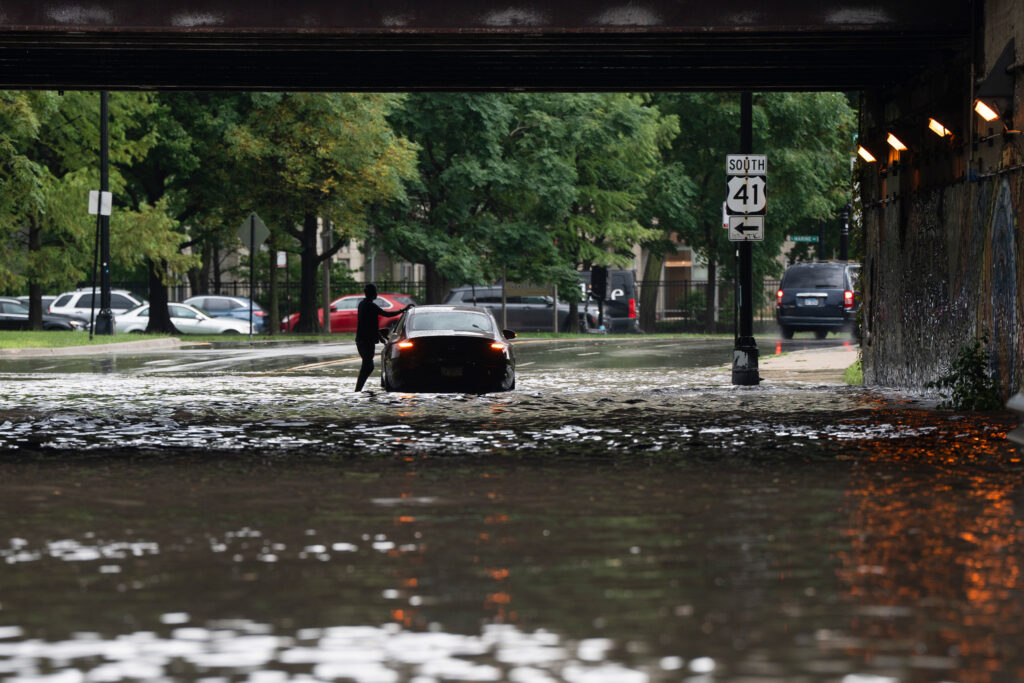
In a little-noticed memo early last year, Illinois scientists made a dire prediction. “Bulletin 76,” a communication from University of Illinois researchers, warned that intense rain made worse by climate change was going to get a lot more severe in the next 25 years. “What is considered safe and adequate today may not hold true in the future,” they wrote of the threat to homes, buildings and people. The threat has been building for years. Over the past century in Chicago, the likelihood of heavy rainstorms has increased sevenfold. These storms can drop more than 8.5 inches of rain in 24 hours. Designed decades ago, Chicago’s sewers can handle just 2 inches in that short period of time before flooding becomes likely. That means every neighborhood in Chicago is at risk of flooding, and that threat rises with every big storm. A half-century ago, construction on the so-called Deep Tunnel began to improve the old method of flood control in the city: dumping sewer water directly into the Chicago River, a practice that continues today, though less frequently. The multibillion-dollar system of underground tunnels and massive reservoirs designed to capture floodwater has worked to help protect the river, as well