Skip to content
OVistoaIntelligence index
AboutMethodologyPricingDocs
Sign inSign up
BREAKINGPerson found dead in car after it plows into health club in Portland, Oregon2 hr ago
Top StoriesUnited StatesCanadaWorldPoliticsGeneralBusinessTechHealthSportsAviationArtificial IntelligencePublishers

How physicists found a new type of magnet hiding in plain sight

1 articles · 1 outlets · spread 0.00

How physicists found a new type of magnet hiding in plain sight
business19 d ago

How physicists found a new type of magnet hiding in plain sight

Full coverage view across outlets, lean, source quality, and framing. Compare framing without algorithmic ranking.

1 articles1 outletsSpread 0.000 claims
OVistoa

Article-level news analysis, transparent scoring, and API tools for readers, publishers, and teams that need source context.

DMCA and copyright review

Copyright owners can submit notices, counter-notices, and source material concerns through the dedicated review flow.

Open DMCA review

Product

  • Home
  • Feed
  • Search
  • Topics
  • Saved

Platform

  • About
  • Methodology
  • Home
  • Search
  • Saved
  • Me

From the Left

0 outlets

No coverage from this perspective yet.

From the Center

1 outlet
  • Scientific American·Apr 14

    How physicists found a new type of magnet hiding in plain sight

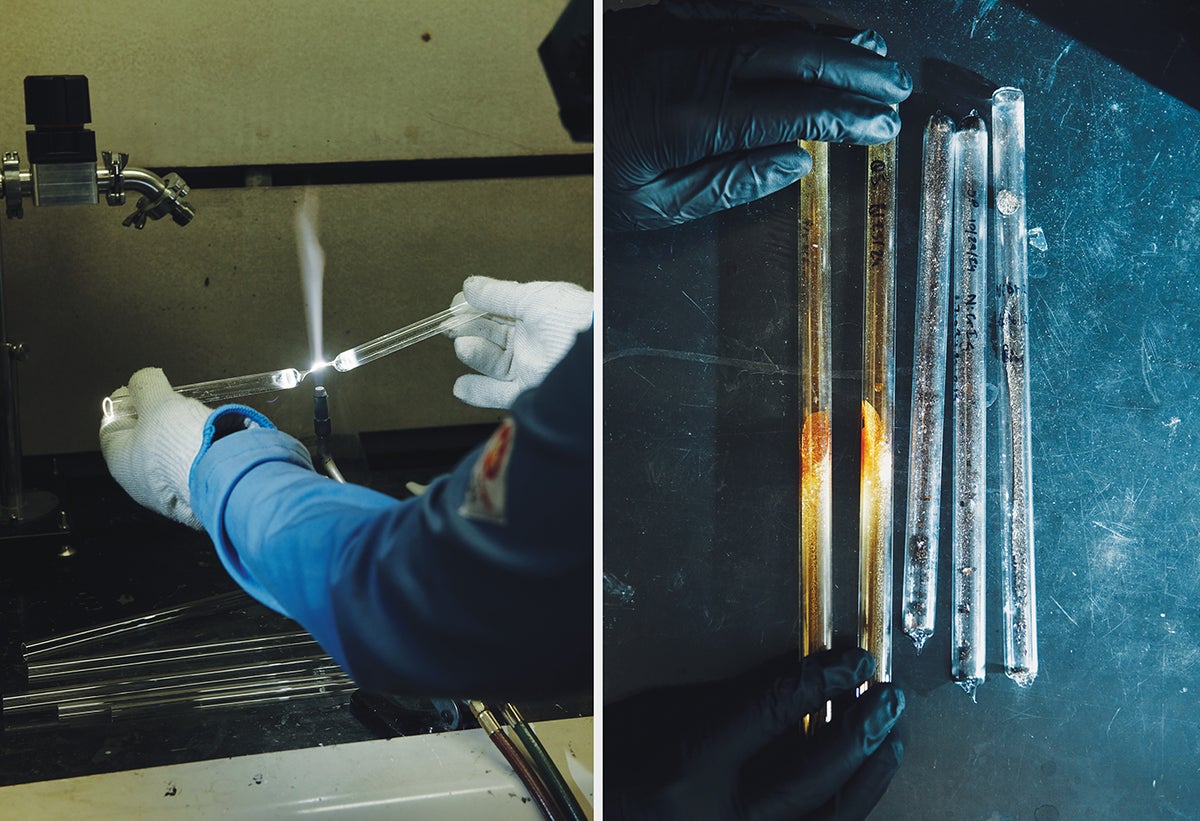
    On a breezy afternoon last autumn in Cambridge, Mass., in a laboratory thrumming with the huff-whish-huff sound of refrigeration pumps, Massachusetts Institute of Technology graduate student Jiaruo Li was crafting a new device for storing digital data. She was aiming to use an exotic kind of magnetism discovered in the same lab the previous year to make the device faster and more energy-efficient than any competing technology. Her goal was timely given the current AI-driven boom in data centers and the exploding demand for power it portends.At that moment Li was focused on finding her version of a needle in a haystack: a barely visible flake of nickel bromide with just the right attributes. To get to this point, she’d grown a dime-sized crystal of the compound by baking a glass tube containing nickel bromide powder for 10 days at high temperatures in a computer-controlled oven in an M.I.T. lab. Then, seeking an atomically thin sample, she’d applied a special tape to her creation, peeled it off and transferred the flakes on the tape to a shiny silicon wafer. Now, holding the wafer up to the light, she eyed a galaxy of thousands of tiny golden crystals against a purple

From the Right

0 outlets

No coverage from this perspective yet.

Claim synthesis

Pro users see canonical claims across the cluster and which outlets reported each one.

Learn more

Outlets covering this story

Scientific American

First seen

Apr 14, 2026

Latest

Apr 14, 2026

Outlets

1

Diversity

100/100

  • Pricing
  • API docs
  • Publishers
  • Account

    • Sign in
    • Create account
    • Reader settings
    • API console

    Legal

    • Terms
    • Privacy
    • Security
    • DMCA

    © 2026 Vistoa. All rights reserved.

    Limited excerpts, attribution, analysis, and outbound publisher links remain core product boundaries.