Skip to content
OVistoaIntelligence index
AboutMethodologyPricingDocs
Sign inSign up
BREAKINGPerson found dead in car after it plows into health club in Portland, Oregon11 min ago
Top StoriesUnited StatesCanadaWorldPoliticsGeneralBusinessTechHealthAviationSportsArtificial IntelligencePublishers

Synthetic blood clots snap cells together to staunch bleeding — fast

1 articles · 1 outlets · spread 0.00

Synthetic blood clots snap cells together to staunch bleeding — fast
technology19 hr ago

Synthetic blood clots snap cells together to staunch bleeding — fast

Full coverage view across outlets, lean, source quality, and framing. Compare framing without algorithmic ranking.

1 articles1 outletsSpread 0.000 claims
OVistoa

Article-level news analysis, transparent scoring, and API tools for readers, publishers, and teams that need source context.

DMCA and copyright review

Copyright owners can submit notices, counter-notices, and source material concerns through the dedicated review flow.

Open DMCA review

Product

  • Home
  • Feed
  • Search
  • Topics
  • Saved

Platform

  • About
  • Methodology
  • Home
  • Search
  • Saved
  • Me

From the Left

0 outlets

No coverage from this perspective yet.

From the Center

1 outlet
  • Nature

    Synthetic blood clots snap cells together to staunch bleeding — fast

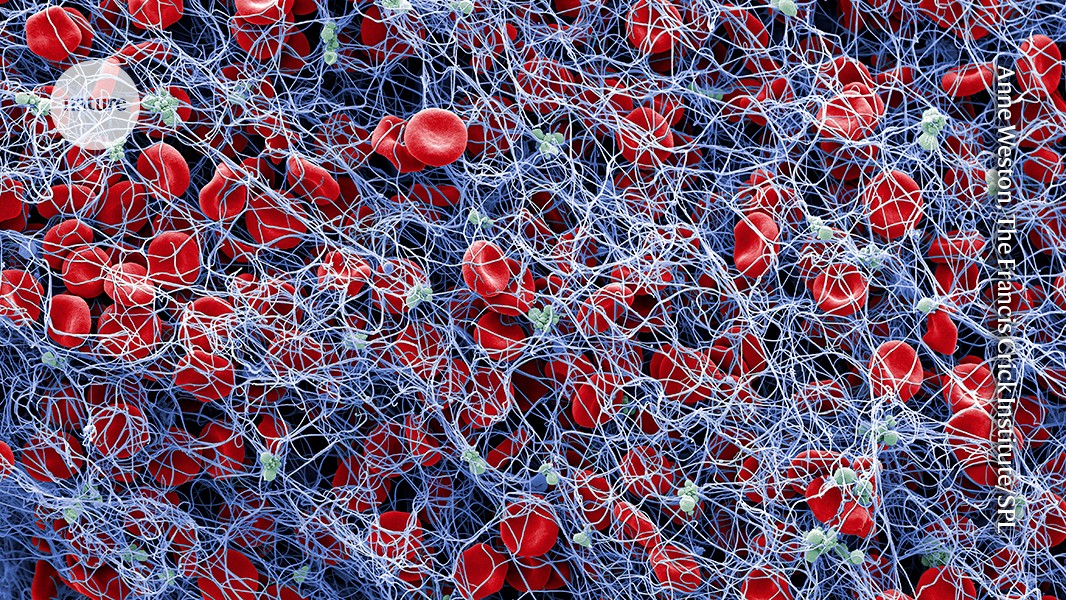
    Natural blood clots, which include platelets (light blue clumps) and red blood cells in a fibrin mesh, can take minutes to form.Credit: Anne Weston, EM STP, The Francis Crick Institute/Science Photo LibraryRed blood cells modified with Nobel-prizewinning chemistry can snap together to form clots that staunch bleeding in seconds. That’s according to a study, published on 29 April in Nature1, that tested the technology in rats.The method, called click clotting, produces clots that are stronger than either natural clots or a commercial product used to stop bleeding. If shown to be safe and effective in people, the approach could provide a rapid way to induce haemostatis, the body’s natural process for controlling bleeding, and to stem potentially deadly blood loss during surgery or after injuries.“It’s really cool,” says Ashley Brown, a biomedical engineer jointly at the University of North Carolina in Chapel Hill and North Carolina State University in Raleigh, who was not involved in the study. “Particularly in emergency medicine, there’s a large need for materials that can be easily transported and rapidly induce haemostasis.”Thinking outside the clotThe engineered clots are unusual: red blood cells are not primarily responsible for initiating natural blood clots. Instead, specialized cells called platelets,

From the Right

0 outlets

No coverage from this perspective yet.

Claim synthesis

Pro users see canonical claims across the cluster and which outlets reported each one.

Learn more

Outlets covering this story

Nature

First seen

Date unavailable

Latest

May 2, 2026

Outlets

1

Diversity

100/100

  • Pricing
  • API docs
  • Publishers
  • Account

    • Sign in
    • Create account
    • Reader settings
    • API console

    Legal

    • Terms
    • Privacy
    • Security
    • DMCA

    © 2026 Vistoa. All rights reserved.

    Limited excerpts, attribution, analysis, and outbound publisher links remain core product boundaries.