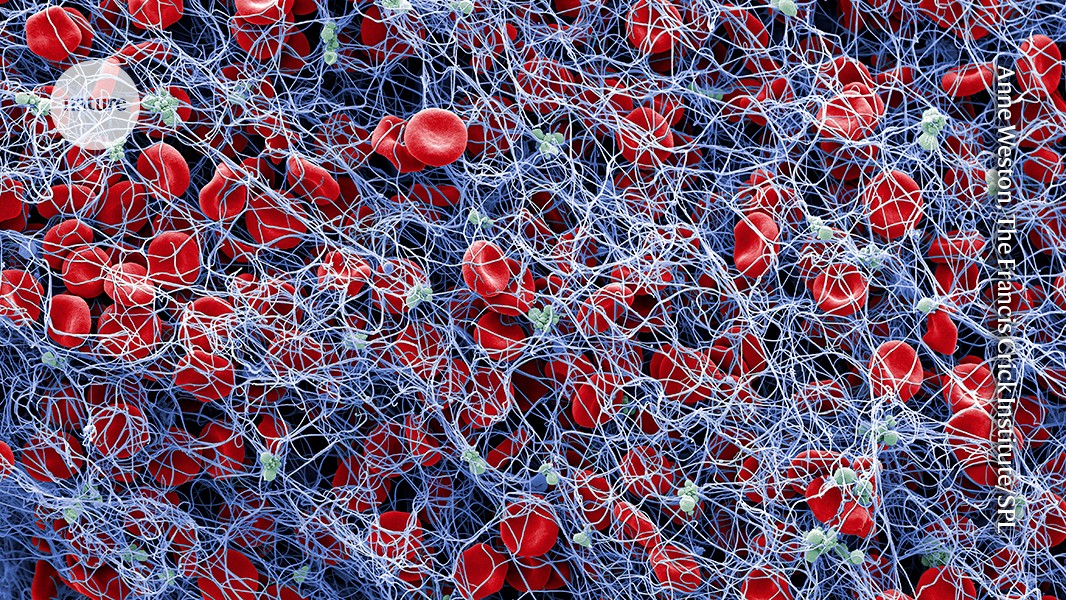
Natural blood clots, which include platelets (light blue clumps) and red blood cells in a fibrin mesh, can take minutes to form.Credit: Anne Weston, EM STP, The Francis Crick Institute/Science Photo LibraryRed blood cells modified with Nobel-prizewinning chemistry can snap together to form clots that staunch bleeding in seconds. That’s according to a study, published on 29 April in Nature1, that tested the technology in rats.The method, called click clotting, produces clots that are stronger than either natural clots or a commercial product used to stop bleeding. If shown to be safe and effective in people, the approach could provide a rapid way to induce haemostatis, the body’s natural process for controlling bleeding, and to stem potentially deadly blood loss during surgery or after injuries.“It’s really cool,” says Ashley Brown, a biomedical engineer jointly at the University of North Carolina in Chapel Hill and North Carolina State University in Raleigh, who was not involved in the study. “Particularly in emergency medicine, there’s a large need for materials that can be easily transported and rapidly induce haemostasis.”Thinking outside the clotThe engineered clots are unusual: red blood cells are not primarily responsible for initiating natural blood clots. Instead, specialized cells called platelets,
Lean: n/a · Source quality n/a · Factual vs opinion n/a.
© 2026 Vistoa. All rights reserved.
Limited excerpts, attribution, analysis, and outbound publisher links remain core product boundaries.