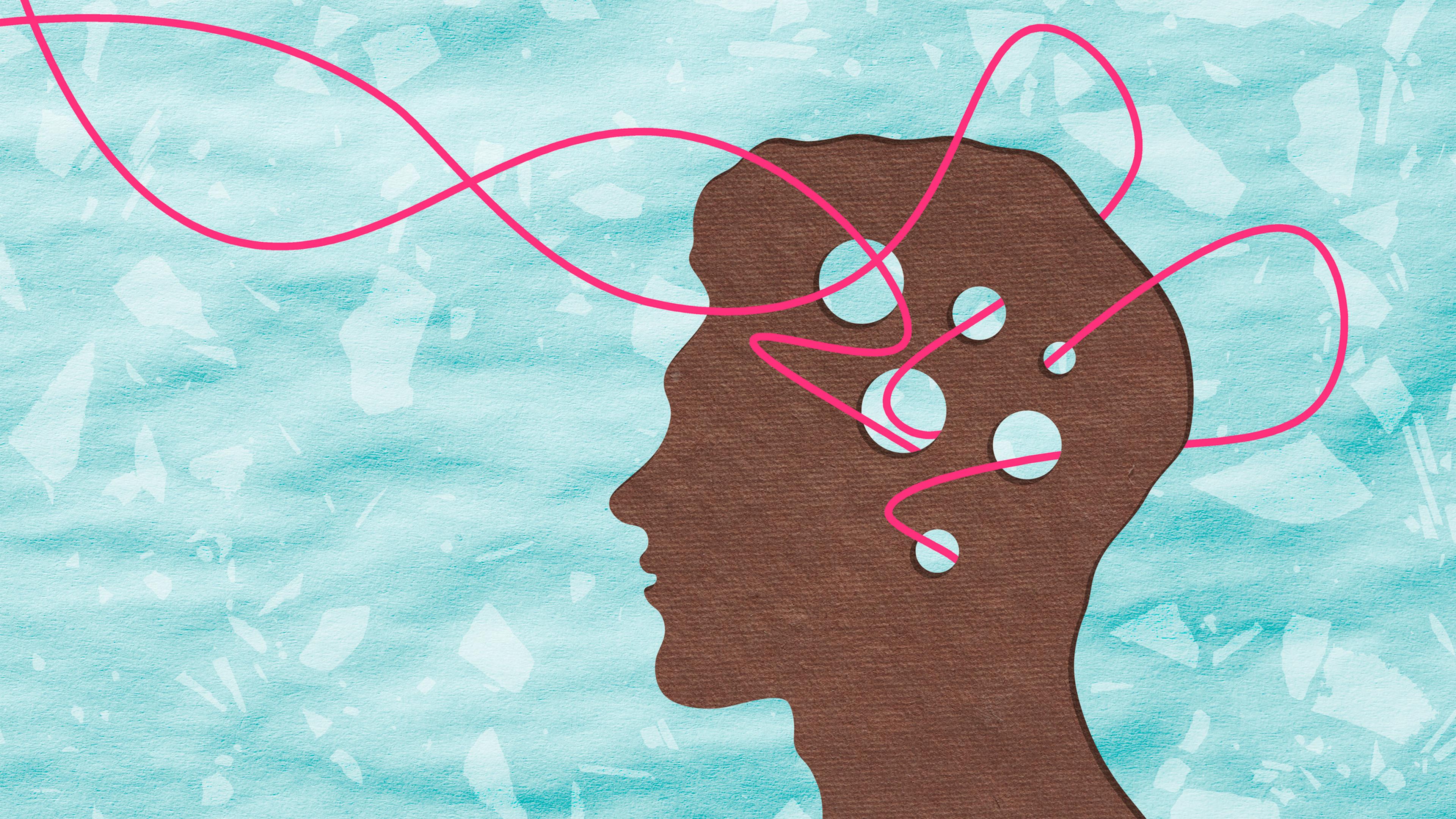
AI now helps people with wedding toasts, tax returns, and processing the trauma of war. The technology’s generality lets it occupy roles that used to be human-only: assistant, tutor, friend, lover, therapist. It is endlessly patient, always available, and—unlike any prior tool—an active participant in our cognitive lives.While past tools let us externalize discrete mental processes—notebooks for memory, calculators for computation, maps for navigation—AI widens the aperture. Now, summarizing and analyzing information, generating ideas, and making decisions can all be offloaded too. “It's starting to creep into the things we thought were cognitively ours,” says Evan Risko, a professor at the University of Waterloo who studies “cognitive offloading,” or the practice of taking external action to make mental tasks easier.Although the creators of these AI tools describe them as “thought partners” and “collaborators,” the role AI plays in our lives is often stranger. With its jagged but expansive knowledge, ceaseless attention, and persuasive tone, AI dotes on us while asking for nothing but our data in return. This produces a structural asymmetry: no prior relationship, with tools or people, has this shape.The concern is that while experts—and people who already enjoy thinking, those high in what psychologists call “need for
Lean: n/a · Source quality n/a · Factual vs opinion n/a.
© 2026 Vistoa. All rights reserved.
Limited excerpts, attribution, analysis, and outbound publisher links remain core product boundaries.