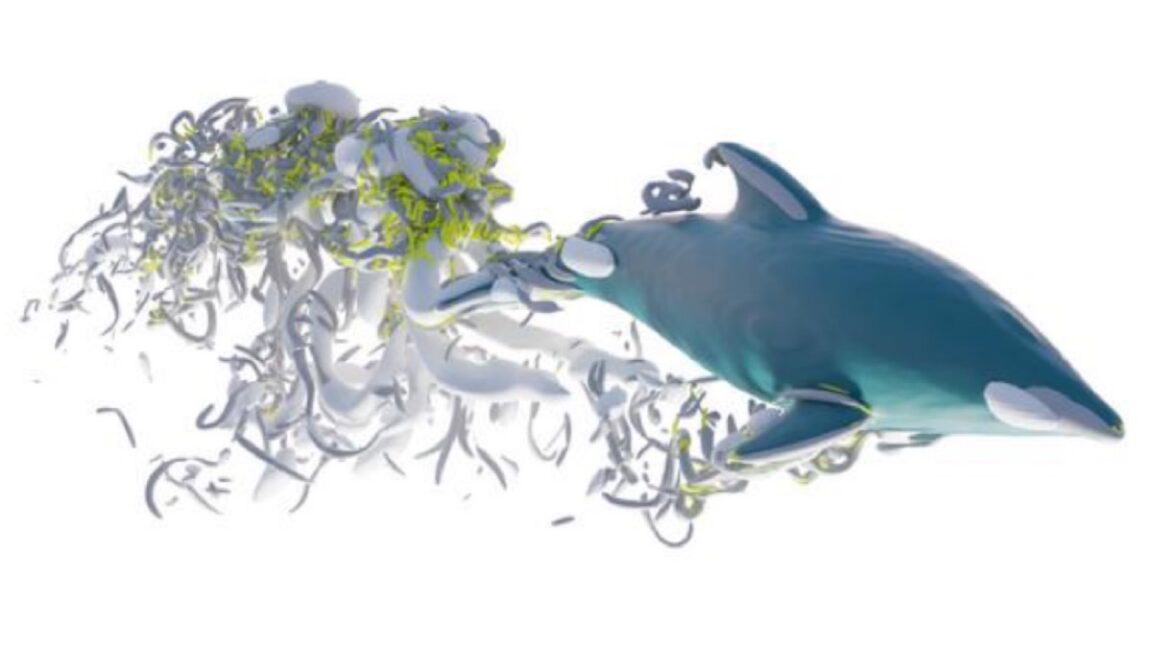
the best of the rest Crushing soda cans for science, why dolphins swim so fast, how urine helps mushrooms communicate, and more Credit: Yutaro Motoori It’s a regrettable reality that there is never enough time to cover all the interesting scientific stories we come across. So every month, we highlight a handful of the best stories that nearly slipped through the cracks. April’s list includes tracking Roman ship repairs, the discovery that mushrooms can detect human urine, crushing soda cans for science, and the physics of why dolphins can swim so fast. Physics of why dolphins swim so fast Dolphins are very good swimmers but the exact mechanisms by which they achieve their impressive speed and agility in water have remained murky. Japanese scientists from the University of Osaka ran multiple supercomputer simulations to learn more about how dolphins optimize their propulsion and found it has to do with the vortices, or eddies, produced by dolphin kicks, according to a paper published in the journal Physical Review Fluids. Per the authors, when dolphins flap their tails up and down, the kicking motion pushes water backward and produces swirling currents of varying sizes. The computer simulations enabled the team to break
Lean: 0.000 · Source quality 80/100 · Factual vs opinion 90/100.
© 2026 Vistoa. All rights reserved.
Limited excerpts, attribution, analysis, and outbound publisher links remain core product boundaries.