Skip to content
OVistoaIntelligence index
AboutMethodologyPricingDocs
Sign inSign up
BREAKINGPerson found dead in car after it plows into health club in Portland, Oregon2 hr ago
Top StoriesUnited StatesCanadaWorldPoliticsGeneralBusinessTechHealthSportsAviationArtificial IntelligencePublishers

JWST discovers ‘red monster’ galaxy that challenges astronomers’ understanding of the early universe

1 articles · 1 outlets · spread 0.00

JWST discovers ‘red monster’ galaxy that challenges astronomers’ understanding of the early universe
technology3 d ago

JWST discovers ‘red monster’ galaxy that challenges astronomers’ understanding of the early universe

Full coverage view across outlets, lean, source quality, and framing. Compare framing without algorithmic ranking.

1 articles1 outletsSpread 0.000 claims
OVistoa

Article-level news analysis, transparent scoring, and API tools for readers, publishers, and teams that need source context.

DMCA and copyright review

Copyright owners can submit notices, counter-notices, and source material concerns through the dedicated review flow.

Open DMCA review

Product

  • Home
  • Feed
  • Search
  • Topics
  • Saved

Platform

  • About
  • Methodology
  • Home
  • Search
  • Saved
  • Me

From the Left

0 outlets

No coverage from this perspective yet.

From the Center

1 outlet
  • Scientific American·Apr 30

    JWST discovers ‘red monster’ galaxy that challenges astronomers’ understanding of the early universe

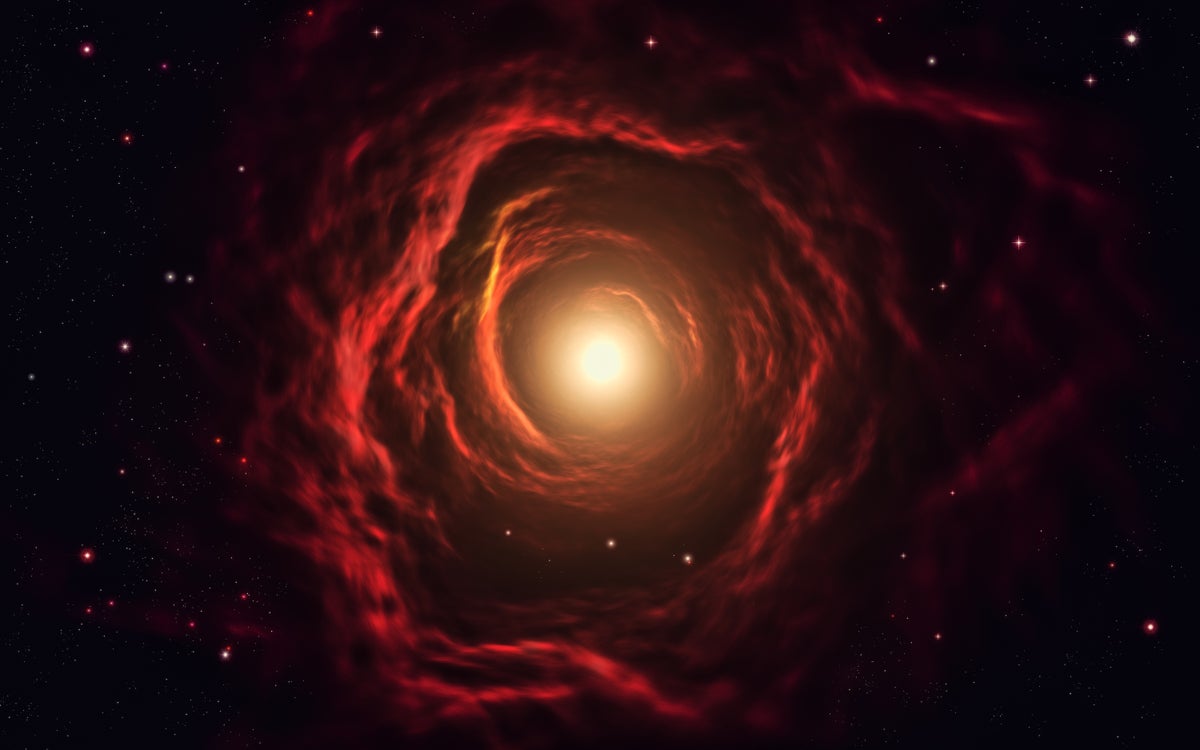
    April 30, 20264 min read Add Us On GoogleAdd SciAmAstronomers puzzle over early origins of mysterious ‘red monster’ galaxyResearchers are perplexed by a galaxy that seems too large and too dusty for its place in cosmic history, less than a half-billion years after the big bangBy Jenna Ahart edited by Lee Billings Xuanyu Han/Getty ImagesAstronomers studying the early universe with NASA’s James Webb Space Telescope (JWST) have found what seems to be a time traveler from the future: a large galaxy so chock-full of dust that the light from its bountiful blue stars has turned a crimson hue. Such heavy loads of dust are generally thought to arise much later in cosmic history than circa 400 million years after the big bang, the epoch at which this newfound galaxy appears.Although the work has yet to be peer-reviewed, a preprint study that analyzed this “red monster” galaxy, officially called EGS-z11-R0, is already making waves in the astronomical community. “It’s astonishing to think about how short these timescales are,” says Pieter van Dokkum, an astrophysicist at Yale University, who was not involved in the study. “Sharks and turtles have been around for about that long.”For perspective, seeing such a big, dusty galaxy

From the Right

0 outlets

No coverage from this perspective yet.

Claim synthesis

Pro users see canonical claims across the cluster and which outlets reported each one.

Learn more

Outlets covering this story

Scientific American

First seen

Apr 30, 2026

Latest

Apr 30, 2026

Outlets

1

Diversity

100/100

  • Pricing
  • API docs
  • Publishers
  • Account

    • Sign in
    • Create account
    • Reader settings
    • API console

    Legal

    • Terms
    • Privacy
    • Security
    • DMCA

    © 2026 Vistoa. All rights reserved.

    Limited excerpts, attribution, analysis, and outbound publisher links remain core product boundaries.