justice6 hr agoCoverage Gap
How Bad Facts Make Good First Amendment Law
Full coverage view across outlets, lean, source quality, and framing. Compare framing without algorithmic ranking.
3 articles1 outletsSpread 0.000 claims
Coverage Gap Analysis
Full coverage view across outlets, lean, source quality, and framing. Compare framing without algorithmic ranking.
The story has meaningful coverage, but the source mix is thinner than expected. Broader source coverage is still thin.
No coverage from this perspective yet.
How Bad Facts Make Good First Amendment Law
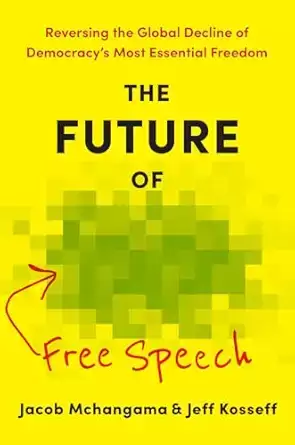
Free Speech Jay Near was a hateful man whose litigation set a vital precedent for free speech. |The Volokh Conspiracy | 5.4.2026 9:20 AM The old legal saying, "bad facts make bad law," might be true in some cases. But that usually occurs when a court strays from its commitment to a neutral set of legal principles, often because a litigant or lawyer is particularly repulsive or persuasive. If a court sticks to those neutral principles, bad facts could make good law when the court demonstrates that the rule of law endures, even in the most difficult circumstances. Jay Near is among the free speech anti-heroes profiled in our book. After arriving in Minneapolis from Iowa, in 1916 he started writing for Howard Guilford's Twin City Reporter, which boasted sensationalist and sometimes racist headlines, such as "White Slavery Trade: Well-Known Local Man Is Ruining Women and Living Off Their Earnings," and used terms like "yids" and "spades." The paper had a reputation for taking bribes from powerful local officials to write scandalous articles about their rivals. As journalist Fred Friendly would write in Minnesota Rag, a 1981 book about Near, Guilford and Near "practiced a brand of journalism that teetered
How Bad Facts Make Good First Amendment Law
The old legal saying, "bad facts make bad law," might be true in some cases. But that usually occurs when a court strays from its commitment to a neutral set of legal principles, often because a litigant or lawyer is particularly repulsive or persuasive. If a court sticks to those neutral principles, bad facts could make good law when the court demonstrates that the rule of law endures, even in the most difficult circumstances. Jay Near is among the free speech anti-heroes profiled in our book. After arriving in Minneapolis from Iowa, in 1916 he started writing for Howard Guilford's Twin City Reporter, which boasted sensationalist and sometimes racist headlines, such as "White Slavery Trade: Well-Known Local Man Is Ruining Women and Living Off Their Earnings," and used terms like "yids" and "spades." The paper had a reputation for taking bribes from powerful local officials to write scandalous articles about their rivals. As journalist Fred Friendly would write in Minnesota Rag, a 1981 book about Near, Guilford and Near "practiced a brand of journalism that teetered on the edge of legality and often toppled over the limits of propriety." Within a few years, Guilford and Near left the newspaper, and
How Bad Facts Make Good First Amendment Law
The old legal saying, "bad facts make bad law," might be true in some cases. But that usually occurs when a court strays from its commitment to a neutral set of legal principles, often because a litigant or lawyer is particularly repulsive or persuasive. If a court sticks to those neutral principles, bad facts could make good law when the court demonstrates that the rule of law endures, even in the most difficult circumstances. Jay Near is among the free speech anti-heroes profiled in our book. After arriving in Minneapolis from Iowa, in 1916 he started writing for Howard Guilford's Twin City Reporter, which boasted sensationalist and sometimes racist headlines, such as "White Slavery Trade: Well-Known Local Man Is Ruining Women and Living Off Their Earnings," and used terms like "yids" and "spades." The paper had a reputation for taking bribes from powerful local officials to write scandalous articles about their rivals. As journalist Fred Friendly would write in Minnesota Rag, a 1981 book about Near, Guilford and Near "practiced a brand of journalism that teetered on the edge of legality and often toppled over the limits of propriety." Within a few years, Guilford and Near left the newspaper, and
No coverage from this perspective yet.
Pro users see canonical claims across the cluster and which outlets reported each one.
Learn moreFirst seen
May 4, 2026
Latest
May 4, 2026
Outlets
1
Diversity
33/100