CriticalLead signal100% confidence3 hr ago
Shooting at lake near Oklahoma City leaves at least 10 wounded, police say
Flashstack
Severity weighted live coverage
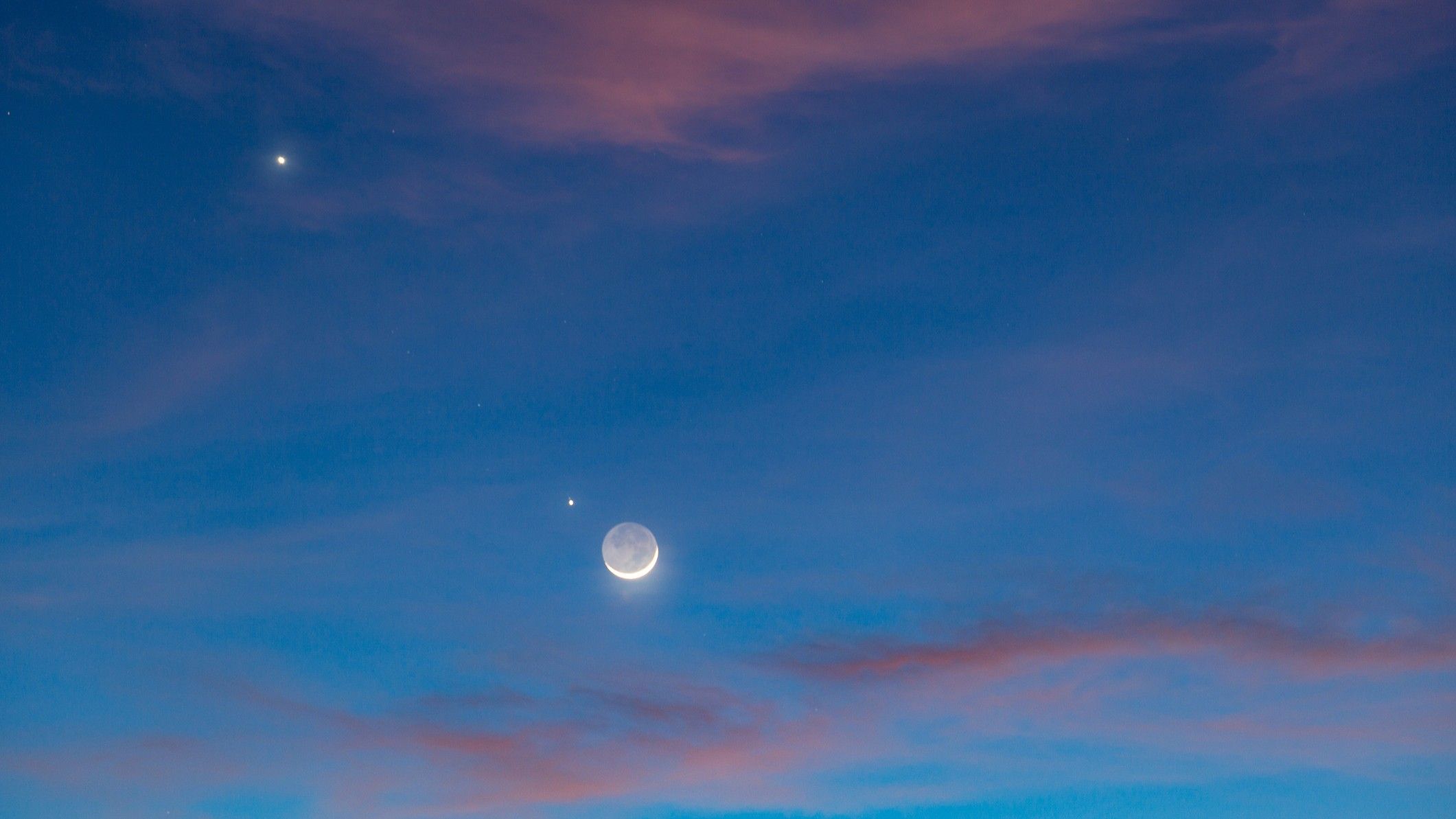
Venus, Jupiter and Mercury headline May's skywatching, with stunning moon pairings and a three-planet display. (Image credit: by Chakarin Wattanamongkol via Getty Images) The best planets to view this month are in the evening sky. Jupiter has been by far the best planet to observe both with the naked eye as well as through binoculars and telescopes these past several months, but its time is running out as it descends noticeably down the western sky during May. It continues to be placed near the "Twin Stars" of Gemini (Pollux and Castor) and the addition of a crescent moon passing by on May 20 makes for a rather attractive sky picture.Although lower in the western sky, Venus shines about seven times brighter than Jupiter, yet continues to be rather disappointing in telescopes. Its gibbous disk appears small and featureless. With the naked eye and especially through good binoculars, its conjunction with a slender crescent moon on May 18 will be very pleasing to see. Earthshine will make the view seem almost three-dimensional.Toward the end of the month, a third bright planet — Mercury — will begin to make its presence felt near the west-northwest horizon shortly after sunset.As far as Saturn
Lean: 0.000 · Source quality 48/100 · Factual vs opinion 84/100.
Methodology
Inter-model agreement