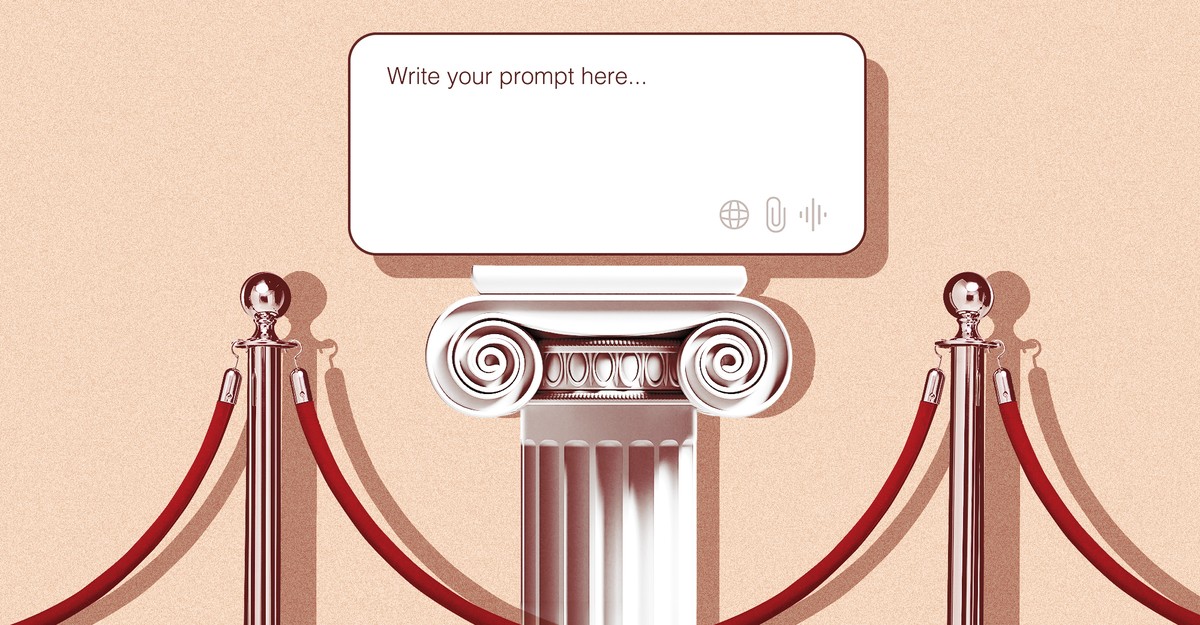
More than 90 lawsuits have been filed by creators against AI companies for copyright infringement. Authors, musicians, visual artists, and news publishers have all accused firms such as OpenAI, Meta, and Anthropic of using their copyrighted works to train AI models without permission. (The Atlantic is involved in one such lawsuit, against the AI firm Cohere.) These cases are frequently framed as the defining fight over the future of creative labor and the entertainment industry as a whole. As one of these lawsuits put it, artists are seeking to end “infringement of their rights before their professions are eliminated by a computer program powered entirely by their hard work.”But the future of creative labor will more likely be decided through a different question within copyright law, one that has received far less attention: To what extent should AI-generated works receive copyright protection at all? In a 2024 case, Thaler v. Perlmutter, the Court of Appeals for the District of Columbia held that a work generated autonomously by an AI system cannot be protected by copyright, because copyright requires a human “author.” The Supreme Court declined to review that decision in March. With the lower-court decision left in place, the question
Lean: n/a · Source quality n/a · Factual vs opinion n/a.
© 2026 Vistoa. All rights reserved.
Limited excerpts, attribution, analysis, and outbound publisher links remain core product boundaries.