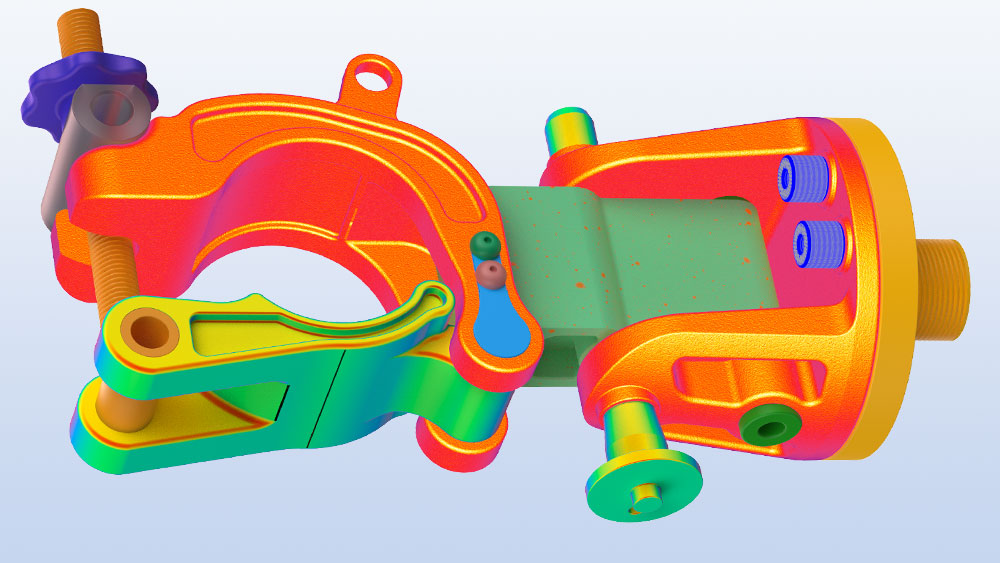
How additive manufacturing helped two world-class athletes start training at their full potential Illustrations by Chengtao Yi Two years ago, Anna Grimaldi, a Paralympic gold-winning athlete from New Zealand, felt that she had hit a wall with her training. Born without a right hand, she had been using a prosthetic to help her grip gym equipment. But it was difficult to find something suitable at her local prosthetics center; the prosthetic that fit her best was actually designed for children, and it was created for everyday activities like picking up a shopping bag, not for holding the 300-plus-pound weights she was lifting at the gym. Her teammate, javelin thrower Holly Robinson, felt similarly: She couldn’t find a prosthetic that felt safe for exercise. Both were frustrated: They were world-class athletes forced to train at less than their full capacity, at risk of competing at a disadvantage just because they couldn’t train the way they wanted. Dr. Stafford Murray, the head of innovation at the government-funded High Performance Sport New Zealand (HPSNZ), heard Robinson mention this at a conference. And when he talked to her afterward, he became determined to find a solution for her and Grimaldi. That’s why Murray, the
Lean: n/a · Source quality n/a · Factual vs opinion n/a.
© 2026 Vistoa. All rights reserved.
Limited excerpts, attribution, analysis, and outbound publisher links remain core product boundaries.