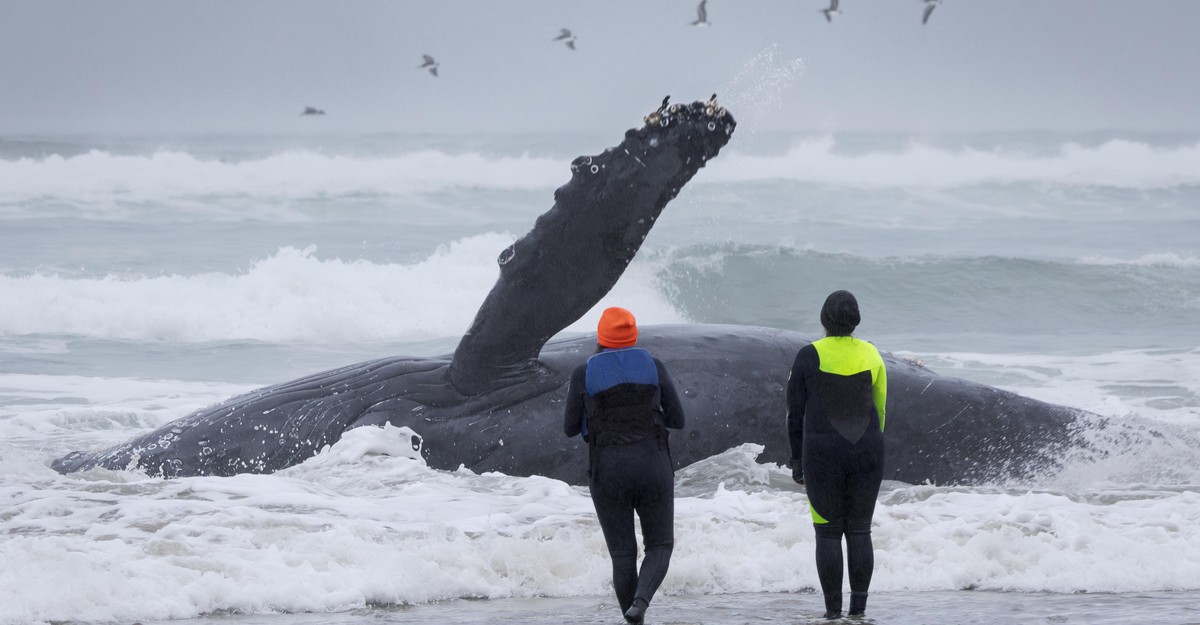
One afternoon in November, just north of the small Oregon coastal town of Yachats, a juvenile humpback whale tumbled ashore. A few hours earlier, local residents had spotted it thrashing in distress half a mile out at sea, entangled in crabbing gear, with a rope bound around its pectoral fin and woven through its baleen. One resident had swum out and cut the whale free, but it didn’t turn itself around and was now lodged on sand in shallow surf. A few people gathered on the beach and called for help. It finally arrived, in the form of two representatives from the Oregon Marine Mammal Stranding Network, a collection of volunteer scientists and advocates based some 20 miles up the coast in Newport. The experts said that given the impending darkness, incoming tide, rough surf, and heavy fog, they couldn’t even assess the whale’s condition until morning.The onlookers scattered—all but one, a local named Amy Parker. She stayed long after sunset, listening to the whale’s haunting, high-pitched cry, a sound so plaintive and elemental that it cut through the roaring surf. The whale wanted help; you didn’t need a degree to interpret those sounds. And Parker, a longtime coast dweller,
Lean: 0.000 · Source quality 70/100 · Factual vs opinion 60/100.
© 2026 Vistoa. All rights reserved.
Limited excerpts, attribution, analysis, and outbound publisher links remain core product boundaries.