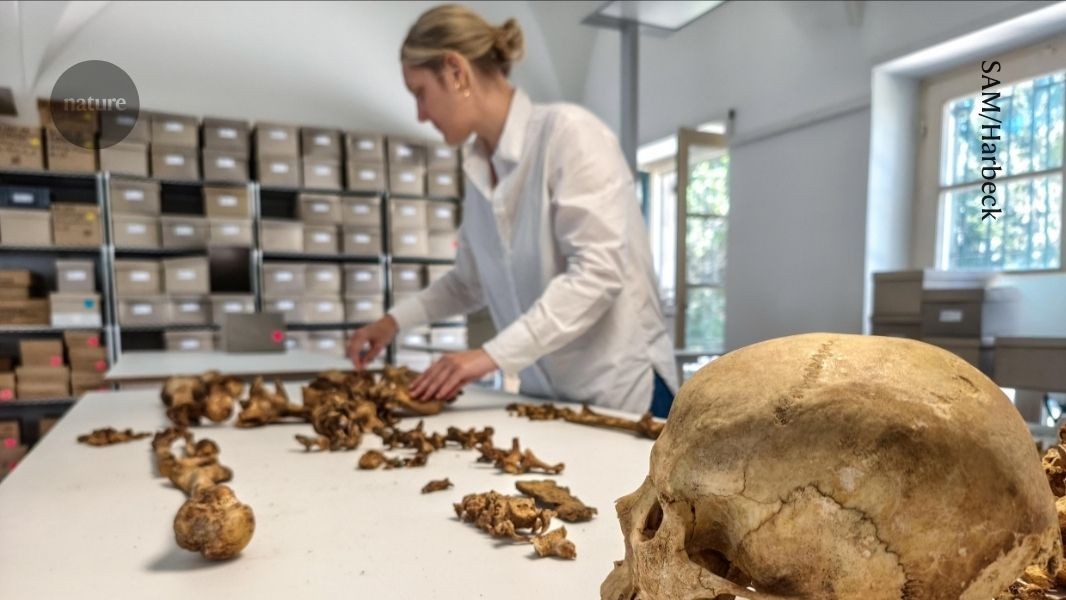
This skeleton from the early medieval site of Altheim belonged to a woman whose ancestors migrated from northern Europe several generations earlier.Credit: SAM/HarbeckAfter the collapse of the Roman Empire, its northern frontier became a melting pot of soldiers, farmers and ‘barbarians’, finds an analysis of ancient genomes from hundreds of burials in southern Germany.The populations and family practices present after the Empire’s fall in ad 476, in many ways, resemble those of modern Europe.Seven generations of a prehistoric family mapped with ancient DNAThe findings, published on 29 April in Nature1, rebut popular ideas of northern barbarian tribes overrunning Roman territory. Instead, they point to gradual genetic and cultural shifts that occurred through small-scale migration and intermarriage.“That’s really important to put to bed — these romantic images of great peoples moving across the European countryside and destroying the Roman Empire,” says Patrick Geary, a medieval historian at the Institute for Advanced Study in Princeton, New Jersey, who was not involved in the study.Ancestry patternsThe collapse of the western Roman Empire reverberated across Europe, reshaping political, religious and social systems. Ancient genomics has uncovered shifts in the genetic make-up of people in different parts of Europe during this time. But it was
Lean: n/a · Source quality n/a · Factual vs opinion n/a.
© 2026 Vistoa. All rights reserved.
Limited excerpts, attribution, analysis, and outbound publisher links remain core product boundaries.