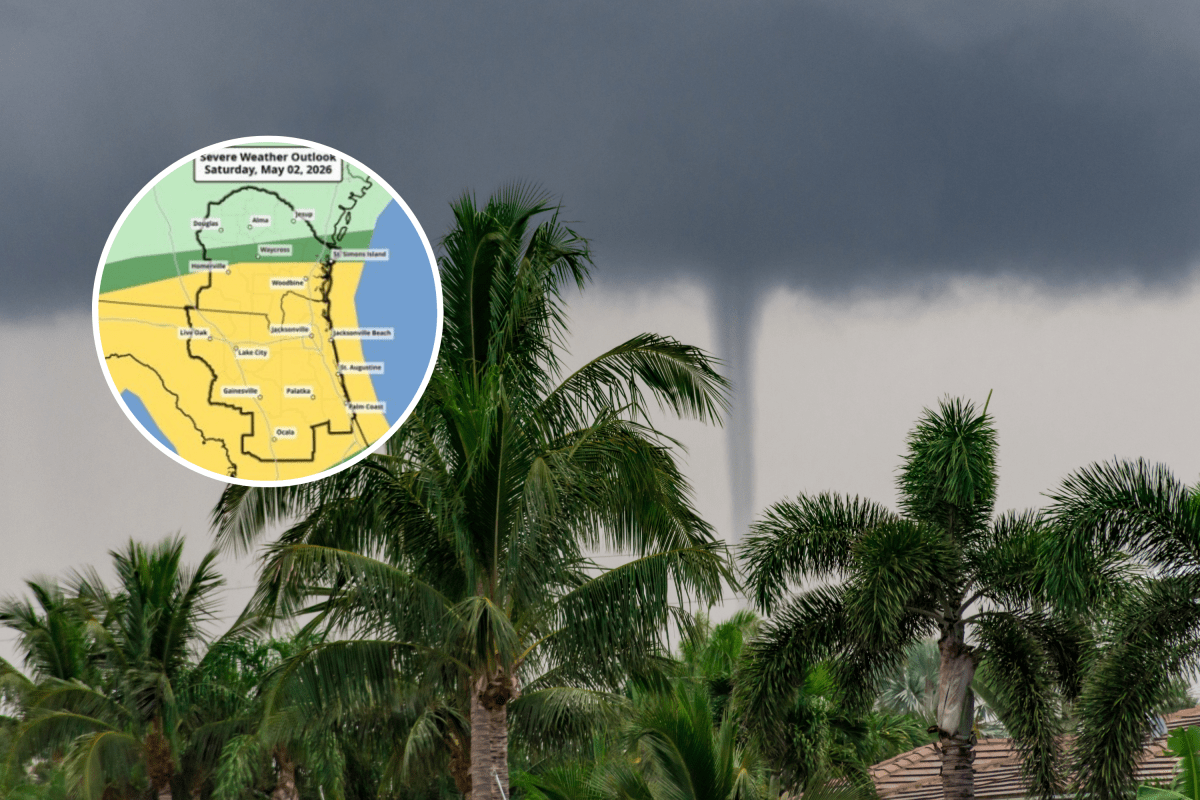
A dangerous line of severe thunderstorms is bearing down on Florida, with forecasters warning that parts of the state face an increased risk of tornadoes, damaging winds and heavy rain as a powerful storm system sweeps eastward across the Southeast.Maps from the National Weather Service (NWS) and the NWS Weather Prediction Center (WPC) highlight parts of northern and central Florida as areas of concern, with forecasters warning that a line of strong to severe thunderstorms could sweep from west to east, bringing damaging wind gusts, heavy rain and a risk of isolated tornadoes. The Day 2 outlook from the WPC shows the greatest risk concentrated across northern Florida and into the eastern Gulf Coast, as a low-pressure system interacts with warm, moist air already in place over the region.The storm threat comes as much of Florida is grappling with worsening drought and heightened wildfire danger. In northeast Florida and parts of the interior, drought conditions are labeled as extreme and exceptional, the two most severe classifications on the U.S. Drought Monitor map, with meteorologists citing persistently low rainfall, dry vegetation and low relative humidity. These conditions have increased the likelihood of fast-spreading wildfires, with fire weather alerts remaining in effect
Lean: n/a · Source quality n/a · Factual vs opinion n/a.
© 2026 Vistoa. All rights reserved.
Limited excerpts, attribution, analysis, and outbound publisher links remain core product boundaries.