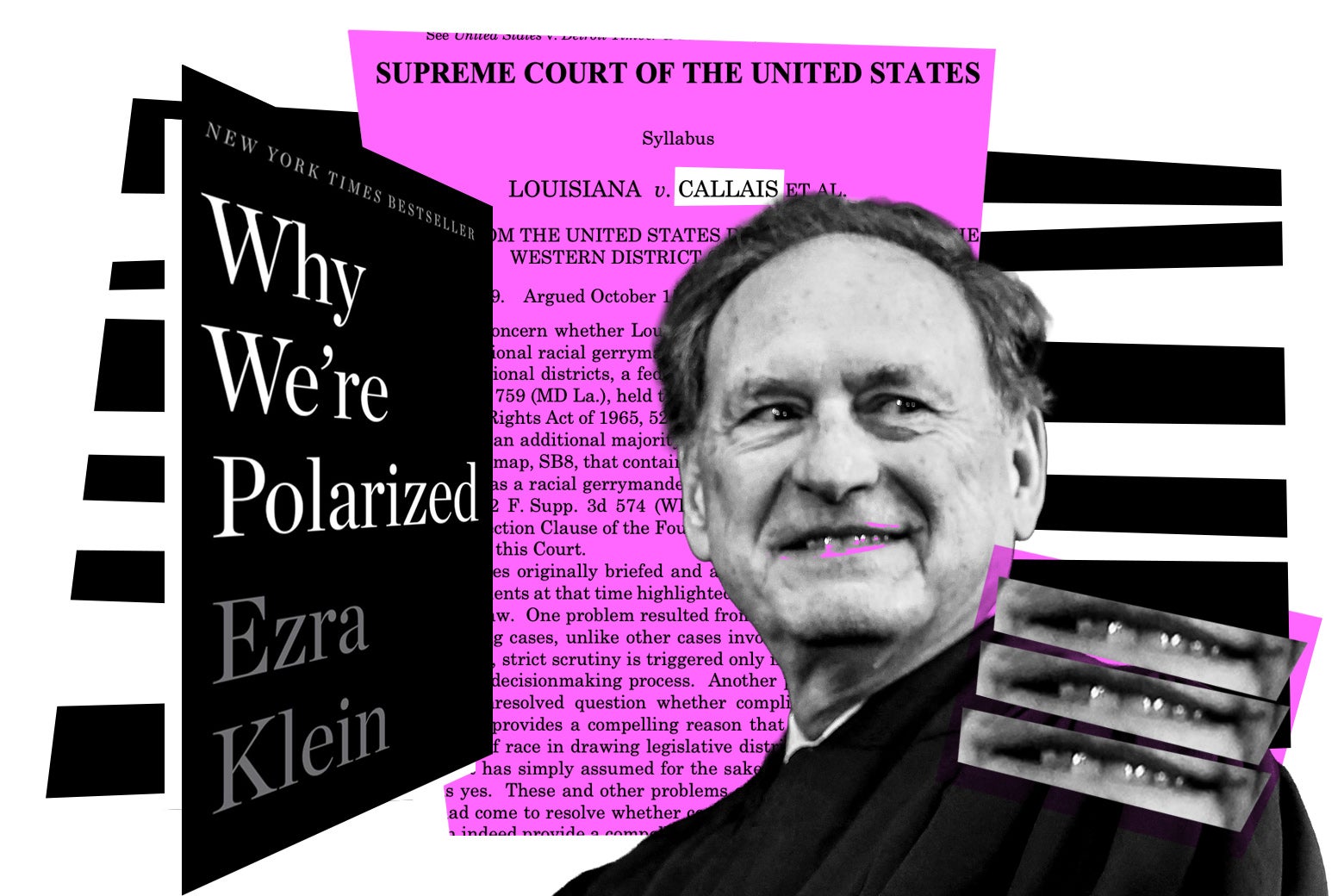
Jurisprudence May 01, 202612:30 PM Polarization is not the problem. Photo illustration by Slate. Photos by Chip Somodevilla/Pool/AFP via Getty Images, SupremeCourt.gov, and Amazon. Sign up for Executive Dysfunction, a newsletter that highlights one under-the-radar story each week about how Trump is changing the law—or how the law is pushing back. You’ll also receive updates on the latest from Slate’s Jurisprudence team. For two decades, a certain kind of American political thinker has insisted they know the real problem. Authoritarianism, oligarchy, and racism were symptoms rather than causes. The true pathology was partisan polarization. The sorting of Americans into hostile camps. The collapse of bipartisan comity. We built serious institutions around this diagnosis. Duke opened its Polarization Lab. Princeton launched its Bridging Divides Initiative. No Labels raised tens of millions of dollars. Braver Angels held town halls. The Carnegie Foundation offered prestigious fellowships, and the American Academy of Arts and Sciences convened a blue-ribbon commission. Ezra Klein’s bestselling book didn’t seek to answer why democracy is dying, but Why We’re Polarized. Today there are more conferences and fellowships devoted to “bridging divides” than there are functioning bridges between the parties. The Supreme Court just revealed where that project was leading.
Lean: -0.700 · Source quality 30/100 · Factual vs opinion 25/100.
© 2026 Vistoa. All rights reserved.
Limited excerpts, attribution, analysis, and outbound publisher links remain core product boundaries.