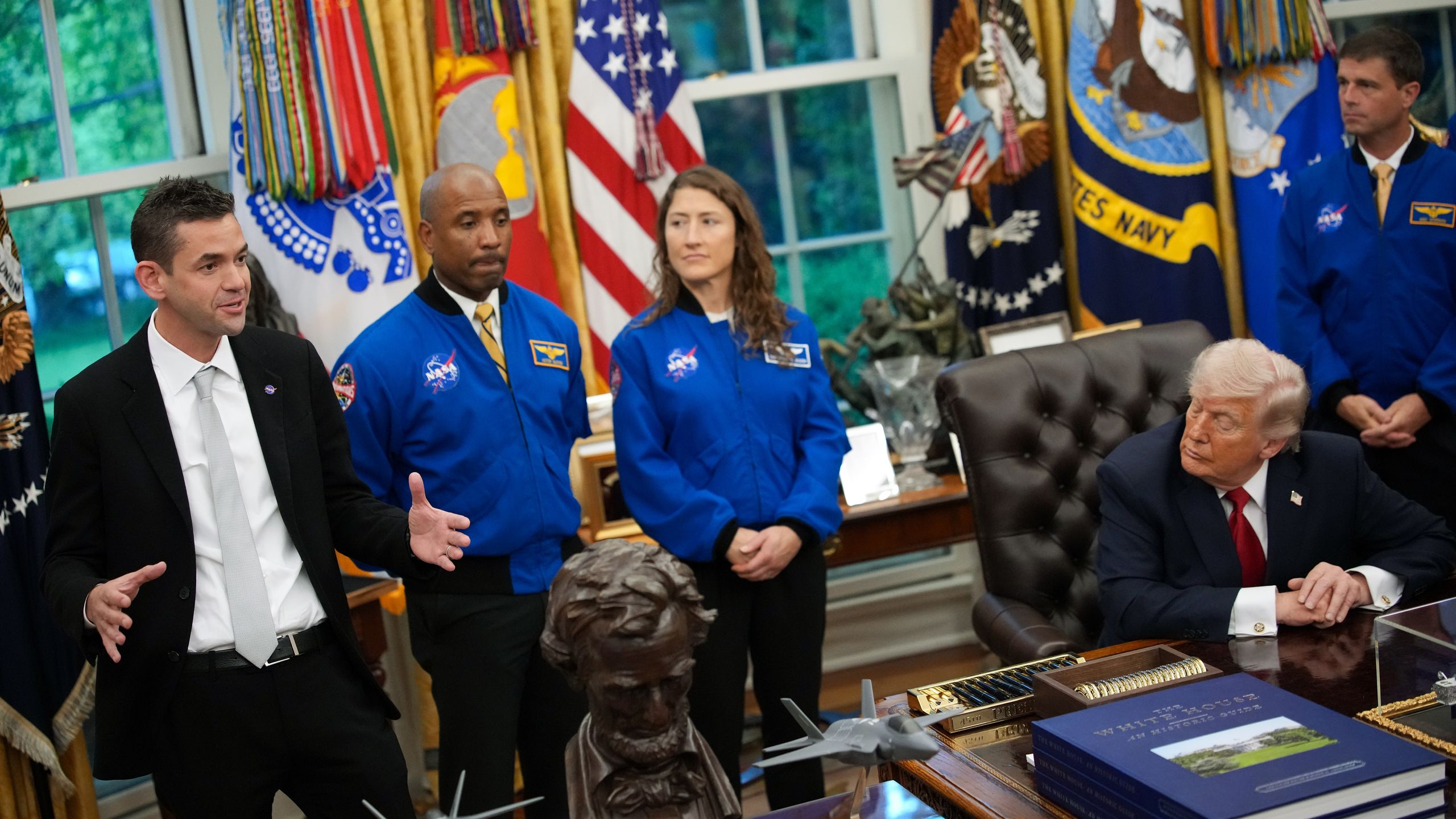
Artemis 2 enchanted the world in the beginning of April, when its crew of four astronauts flew a 10-day mission around the moon and back to Earth. It was the first human spaceflight of the agency's Artemis program, and the first crewed moon mission in more than half a century.Part of that vision includes increasing how often NASA launches Artemis' Space Launch System (SLS) rocket — with the goal of shortening the gap between missions from a few years to about 10 months. (There was a 3.5-year gap between Artemis 1 and Artemis 2.) Artemis 3 also got a complete redesign, from the program's first lunar landing mission to an Earth-orbit rendezvous and docking-only demonstration between Orion and the program's privately developed lunar landers. Now, it seems those landers may have a hard time hitting NASA's 10-month cadence target. Artemis 2 lifts off from Launch Complex-39B, at NASA's Kennedy Space Center, April 1, 2026. (Image credit: Space.com / Josh Dinner)Isaacman testified before the House Appropriations Committee on Monday (April 27), answering lawmakers' questions regarding the White House's 2027 budget request for NASA, which allocates $2.8 billion for the Artemis Human Landing System contracts — the program's lunar lander vehicles. NASA
Lean: 0.050 · Source quality 70/100 · Factual vs opinion 85/100.
© 2026 Vistoa. All rights reserved.
Limited excerpts, attribution, analysis, and outbound publisher links remain core product boundaries.