Skip to content
OVistoaIntelligence index
AboutMethodologyPricingDocs
Sign inSign up
BREAKINGPerson found dead in car after it plows into health club in Portland, Oregon38 min ago
Top StoriesUnited StatesCanadaWorldPoliticsGeneralBusinessTechHealthAviationSportsArtificial IntelligencePublishers

Space.com

May 1, 2026

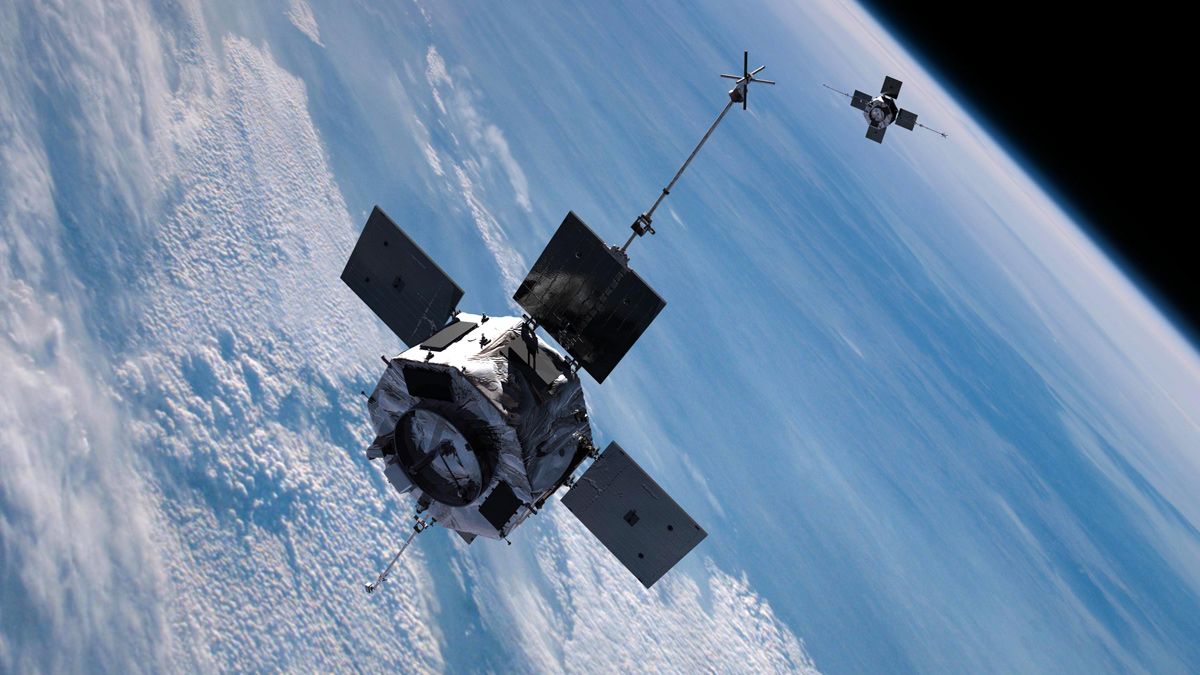
The identical Radiation Belt Storm Probes will follow similar orbits that will take them through both the inner and outer radiation belts.
Space.comby Chelsea Gohd·May 1, 2026

Thinner than a hair and stretchy like rubber: New material could shield against radiation in next-gen space tech

OVistoa

Article-level news analysis, transparent scoring, and API tools for readers, publishers, and teams that need source context.

DMCA and copyright review

Copyright owners can submit notices, counter-notices, and source material concerns through the dedicated review flow.

Open DMCA review

Product

  • Home
  • Feed
  • Search
  • Topics
  • Saved

Platform

  • About
  • Methodology
  • Home
  • Search
  • Saved
  • Me
Political leancenter
Source quality60/100
Factual ratio80/100
Framing20/100

A variety of space tech uses or emits different types of radiation. One new study proposes a new material that could help to shield that radiation, protecting instruments as well as humans in the process. (Image credit: JHU/APL, NASA) Scientists have developed a new material that could shield humans and critical technology from harmful radiation, and it's thinner than a human hair and stretches like rubber.Radiation is a major factor to consider when astronauts go to space – and it isn't just space radiation. There are a wide variety of technologies needed to get to space that involve radiation, including medical devices, semiconductors, power plants and even spacecraft themselves. Often, such radiation is integral to the function of these technologies, but the downside is that it can pose risks to damaging or interfering with other nearby tech as well as possible health risks to humans.Article continues below "This material represents a completely new concept in shielding technology — it is as thin as tape and as flexible as rubber, yet simultaneously blocks both electromagnetic waves and radiation," lead author Joo yong-ho at the Extreme Environment Shielding Materials Research Center of the Korea Institute of Science and Technology said in a

Read at Space.comCompare full coverage

Lean: 0.000 · Source quality 60/100 · Factual vs opinion 80/100.

Score signature

Political lean

Political leancenterSource quality60/100Factual ratio80/100Framing20/100

Methodology

v1

Inter-model agreement

Partial agreement
100
Source diversity
across 1 outlet
Compare full coverage
  • Pricing
  • API docs
  • Publishers
  • Account

    • Sign in
    • Create account
    • Reader settings
    • API console

    Legal

    • Terms
    • Privacy
    • Security
    • DMCA

    © 2026 Vistoa. All rights reserved.

    Limited excerpts, attribution, analysis, and outbound publisher links remain core product boundaries.