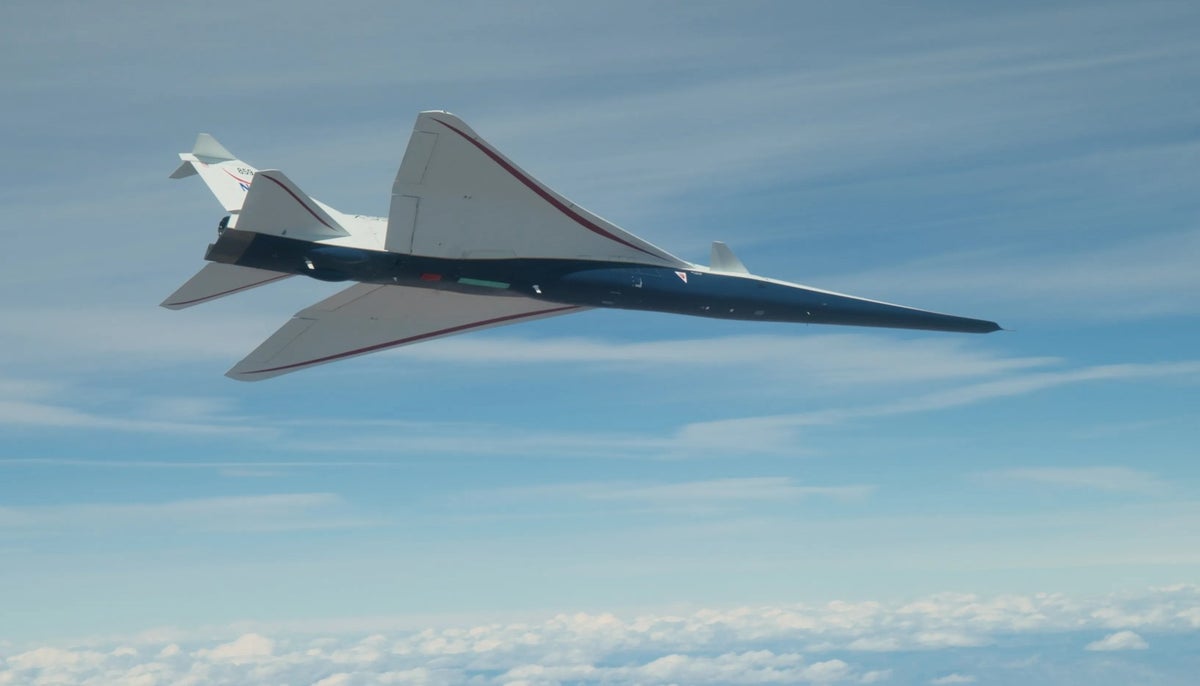
This next-generation plane is made to go faster than sound without producing a full sonic boomBy Jackie Flynn Mogensen edited by Claire CameronJoin Our Community of Science Lovers!NASA wants to make supersonic travel quieter. On Thursday the agency released new footage of its X-59 jet, a still-in-development plane that is designed to break the sound barrier over land—but with a sonic “thud” rather than a boom.Faster air travel speeds mean shorter flights. But when an aircraft travels more rapidly than the speed of sound, it creates shock waves, generating a sonic boom. Those sonic booms can be a nuisance for people living nearby and can even cause damage to homes and startle animals.The X-59 jet is NASA’s answer to that problem. Featuring a needlelike tip, it’s designed to travel at more than 1,000 miles per hour—about twice as fast as a commercial jet—while limiting the noise of the boom. NASA expects its sonic “thump” to be as loud as “distant thunder” or the thud of a car door closing down the block.On supporting science journalismIf you're enjoying this article, consider supporting our award-winning journalism by subscribing. By purchasing a subscription you are helping to ensure the future of impactful stories
Lean: 0.000 · Source quality 40/100 · Factual vs opinion 85/100.
© 2026 Vistoa. All rights reserved.
Limited excerpts, attribution, analysis, and outbound publisher links remain core product boundaries.