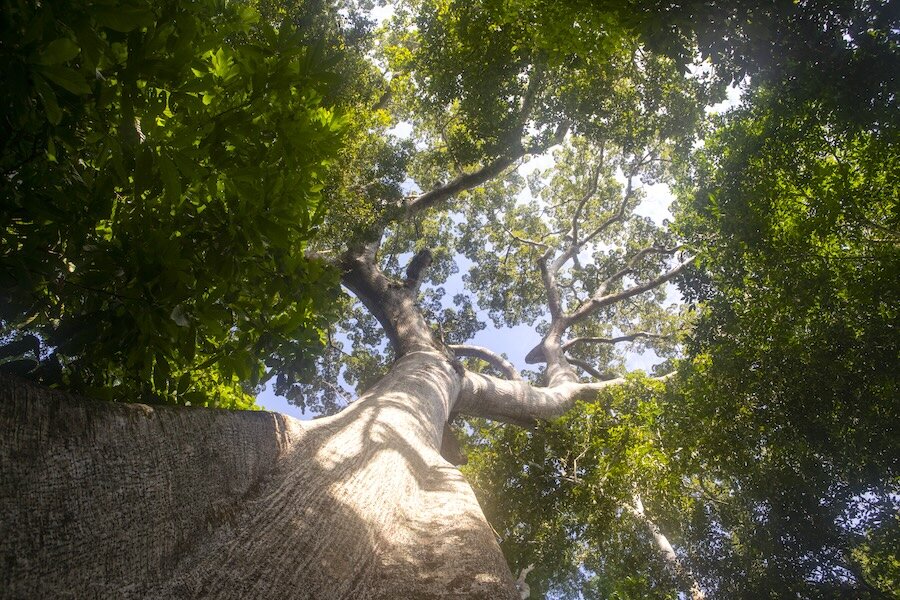
New data on global deforestation has the potential to infuse a breath of fresh air into conservation efforts and the world’s ongoing quest to balance environmental and economic priorities.Findings released this week from the University of Maryland’s Global Land Analysis and Discovery laboratory show that the rate of tree loss worldwide went down by 14% from 2024 to 2025. More significantly, deforestation in tropical rainforests – which help regulate weather by absorbing carbon and releasing water vapor and oxygen – plummeted by 36%.“Improved governance, recognition of Indigenous land rights and corporate commitments” helped spur these achievements in countries such as Brazil, Indonesia, Malaysia, and Colombia, noted the World Resources Institute. While the advocacy group and other environmental experts caution against reading too much into what may be a one-year “lull,” signs of progress are present.Recent years have seen more countries engaging in measured policymaking and enforcement efforts; pursuing private- and public-sector cooperation; broadening civic engagement and participation of Indigenous peoples; and using technology such as satellite imagery to monitor performance. In addition, sophisticated financial instruments are also being used to incentivize forest protection. (This includes the Tropical Forests Forever Facility launched last November to target investment capital to countries maintaining
Lean: n/a · Source quality n/a · Factual vs opinion n/a.
© 2026 Vistoa. All rights reserved.
Limited excerpts, attribution, analysis, and outbound publisher links remain core product boundaries.