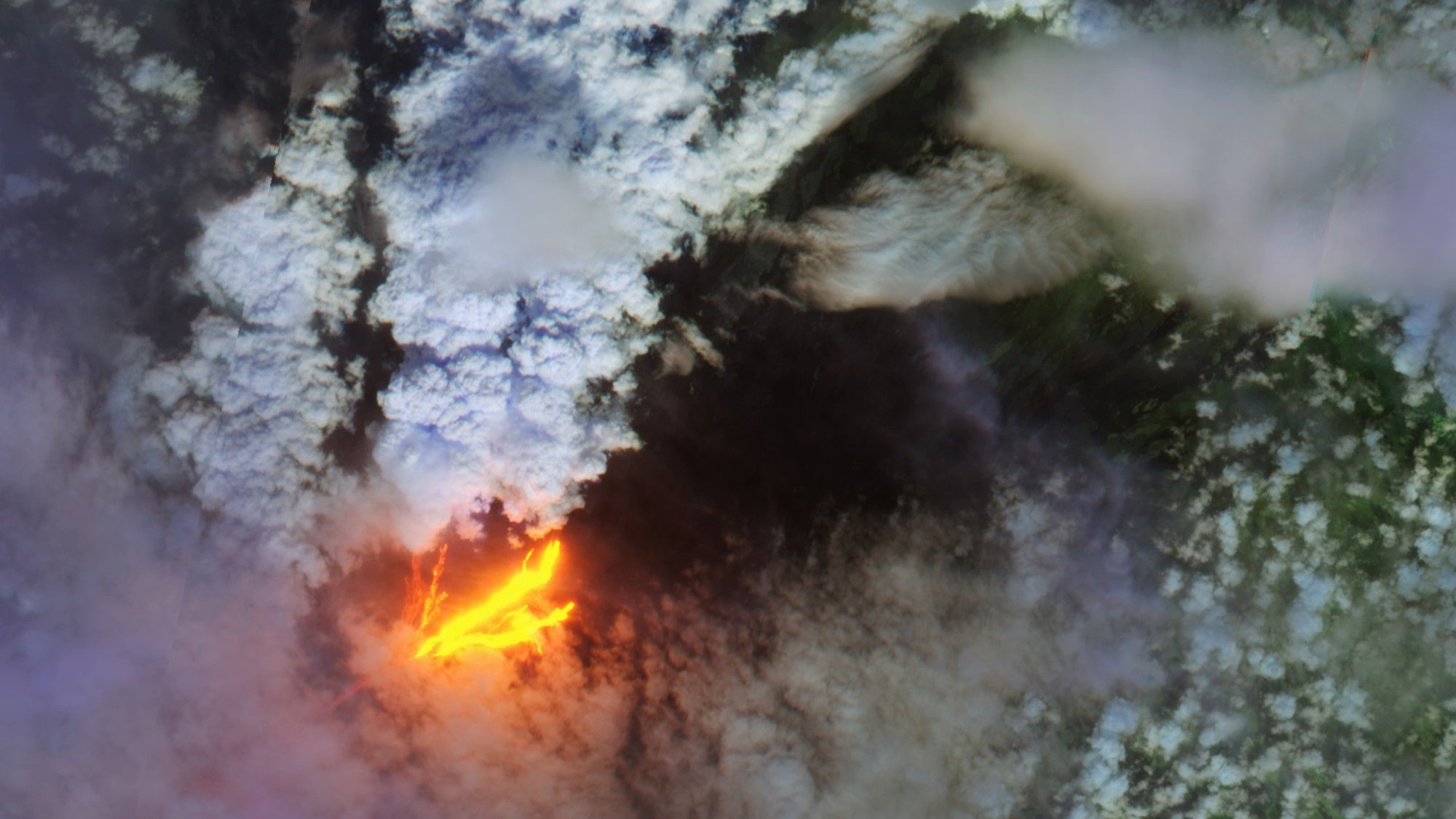
Mauna Loa seen erupting from orbit in 2022 by Europe's Copernicus Sentinel 2 satellite. (Image credit: ESA) With evidence increasingly showing that volcanism is active on the surface of Venus today, a team of geologists have shown how satellite data intended to help scientists better understand volcanic eruptions on Earth could be applied to lava flows on Venus, too.The vast majority of Venus has been resurfaced by volcanism over the past half-billion years, and more than 85,000 volcanoes have been identified on the Venusian surface in radar images. It had been thought that this volcanism took place all in one big burst 500 million years ago, but a recent new look at old radar data from NASA's Magellan mission to Venus in the 1990s has identified what seems to be active volcanism. Additional evidence comes from atmospheric gases (excesses of carbon dioxide, sulfur dioxide and molecular nitrogen), although no direct evidence in the form of volcanic plumes, for example, has been found yet."When we search for active lava flows on other planets, knowing how long it takes for lava to cool on Earth will help us better understand what's happening if we see a hot flow on Venus," said geologist
Lean: 0.000 · Source quality 75/100 · Factual vs opinion 90/100.
© 2026 Vistoa. All rights reserved.
Limited excerpts, attribution, analysis, and outbound publisher links remain core product boundaries.