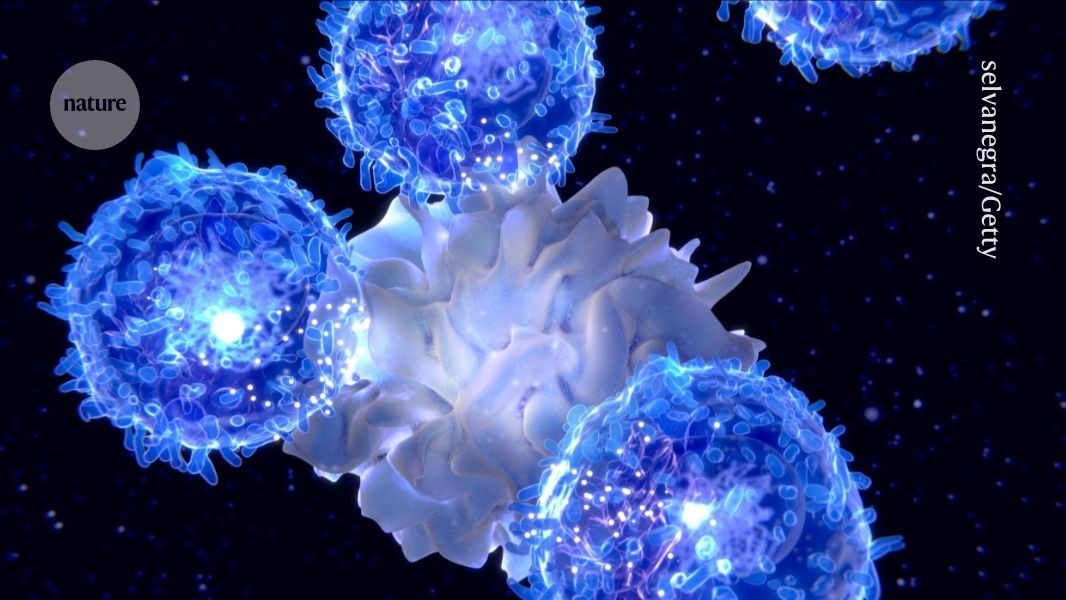
T cells, shown here attacking a tumour cell, might provide a better defence after a person has eaten.Credit: selvanegra/GettyThe best time to get an infection might be after a meal, suggest experiments in mice and humans that found that certain immune cells, known as T cells, seem to get a boost from food.The findings, published on 29 April in Nature1, could identify ways to improve immune therapies, help physicians to decide when to give vaccinations and eventually show how diet can improve immunity.The brain fires up immune cells when sick people are nearby“There’s the old adage: starve a fever, feed a cold. And we think that there’s some value in this,” says study co-author Greg Delgoffe, an immunologist at the University of Pittsburgh in Pennsylvania. He thinks that researchers should reassess how diet influences the immune response. “We don’t really ask, when have you eaten last and what did you eat?” he says. “But that may make a big difference to how effective those T cells are.”“I think this is really an exciting study,” says Lionel Apetoh, an immunologist at Indiana University in Indianapolis who was not involved in the work. He notes that previous T-cell research has looked at
Lean: n/a · Source quality n/a · Factual vs opinion n/a.
© 2026 Vistoa. All rights reserved.
Limited excerpts, attribution, analysis, and outbound publisher links remain core product boundaries.