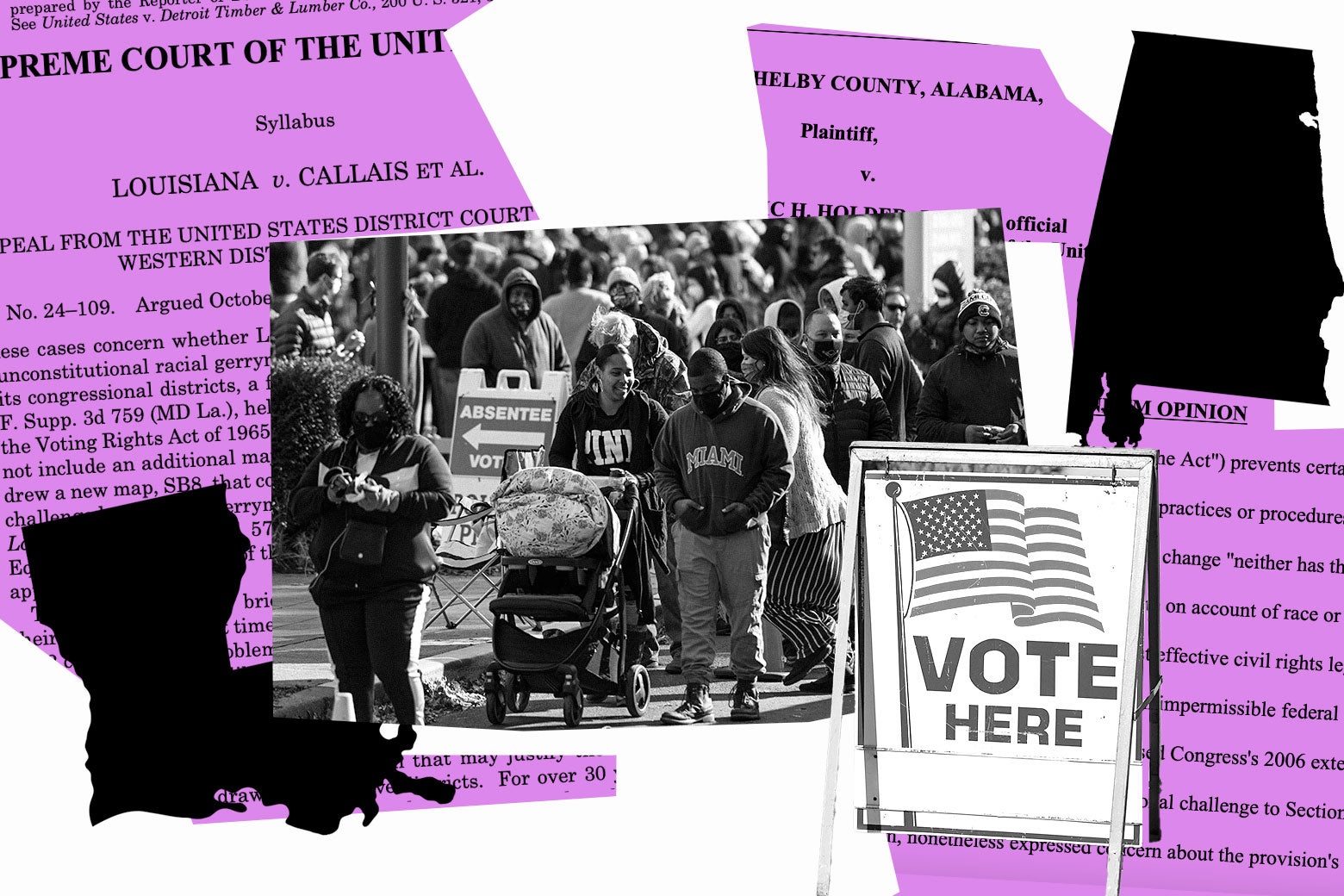
Jurisprudence May 01, 20263:03 PM People wait in line to participate in early voting on Oct. 31, 2020, in Greenville, South Carolina. Photo illustration by Slate. Photos by Sean Rayford/Getty Images, JillianCain/Getty Images Plus, Smart/iStock/Getty Images Plus, and Larysa Stepanechko/Getty Images Plus. Sign up for Executive Dysfunction, a newsletter that highlights one under-the-radar story each week about how Trump is changing the law—or how the law is pushing back. You’ll also receive updates on the latest from Slate’s Jurisprudence team. One big question has emerged in the wake of Louisiana v. Callais, the Supreme Court’s ruling this week that knocked down the Voting Right Act’s final remaining major pillar: How bad are things about to get? History is a good guide. Our work has shown that the court’s previous assaults on the act have wrought devastating consequences for voters of color. The impact of this decision likely won’t be different. Minority voters will now be left with a diminished voice in American politics, rolling back half a century of steady progress toward racial equality in voting practices. The Voting Rights Act is one of the most effective laws in American history. Congress passed it in 1965 to ensure that racial
Lean: -0.600 · Source quality 60/100 · Factual vs opinion 45/100.
© 2026 Vistoa. All rights reserved.
Limited excerpts, attribution, analysis, and outbound publisher links remain core product boundaries.