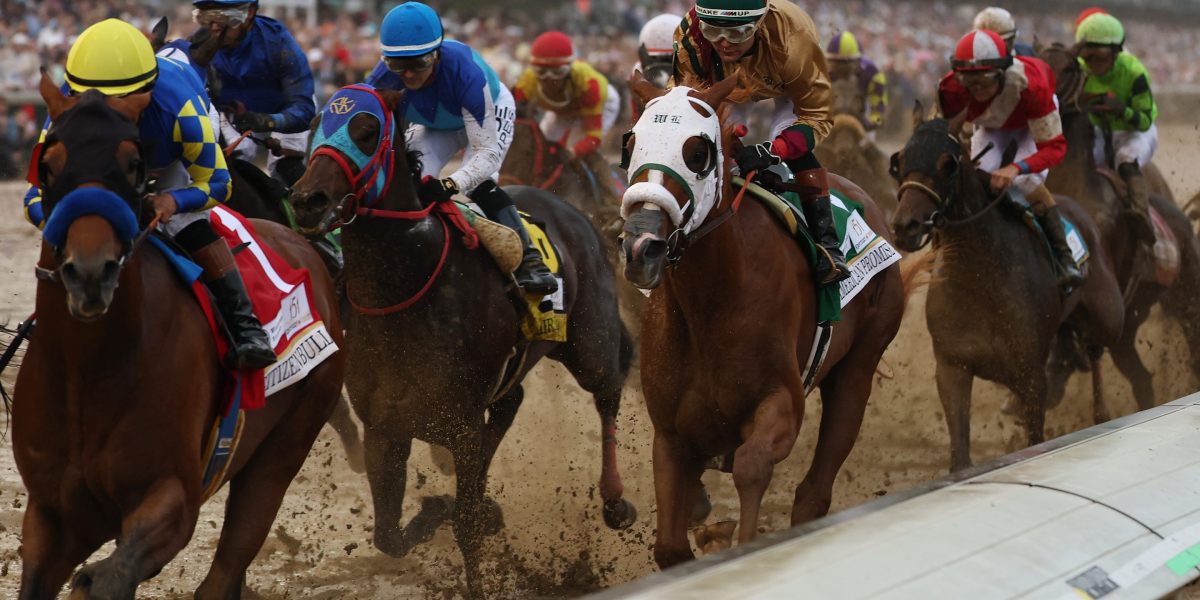
On the first Saturday of May, 150,000 people will pack into Churchill Downs in Louisville wearing their finest hats. Tens of millions more will watch from home. In 2025, 17.7 million Americans tuned in—the largest Derby audience since 1989. And bettors wagered a record $234.4 million on the race itself: $349 million on the full Derby Day program and $473.9 million across Derby Week, all records for the fourth consecutive year. That’s a lot of betting for a single two-minute race. But for anyone who has tried to bet on the Derby through a mainstream sports betting app, it’s surprisingly hard to get in on the action. That’s because the Kentucky Derby runs on a fundamentally different legal system than the one powering America’s $166.94 billion sports betting boom. Kentucky’s betting laws Horse race wagering in Kentucky is legally required to be pari-mutuel, a requirement that creates an entirely different experience than anything FanDuel, DraftKings, or BetMGM offers on the Super Bowl. In a pari-mutuel system, bettors wager against each other, not the house. Every dollar bet on a horse goes into a communal pool. The track skims a percentage—the “takeout”—for operations, purses, and regulatory fees. Whatever remains is divided
Lean: 0.000 · Source quality 70/100 · Factual vs opinion 85/100.
© 2026 Vistoa. All rights reserved.
Limited excerpts, attribution, analysis, and outbound publisher links remain core product boundaries.