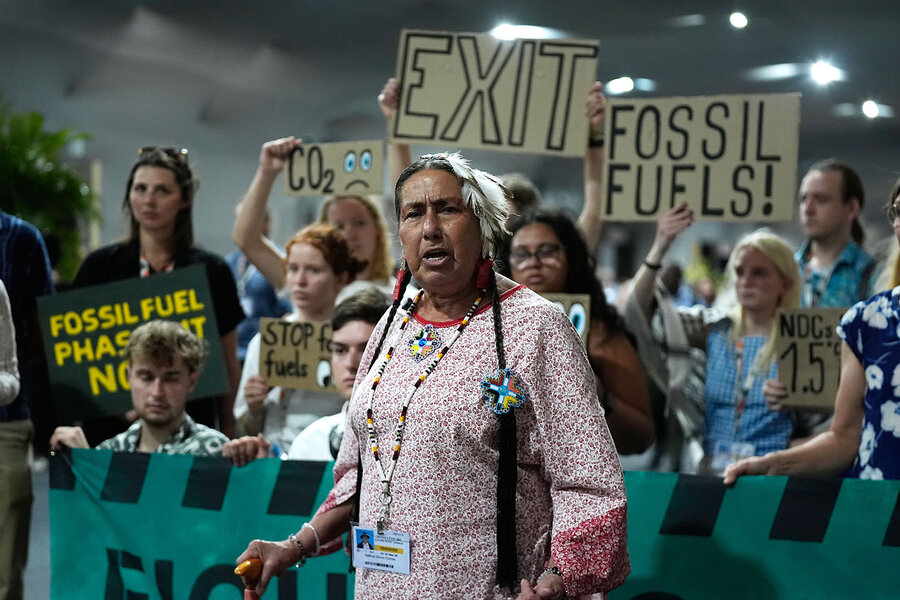
More than 40,000 delegates from nearly 200 countries are getting down to work this week in the Brazilian city of Belém, on the edge of the Amazon rainforest, for what is looking like an increasingly forlorn task: to slow and mitigate the overheating of our planet.But while their work at the 2025 United Nations Climate Change Conference, commonly known as COP30, certainly matters, this latest gathering comes amid a dramatic shift – along with an improbable glimmer of hope – in the politics of climate change.Whether, and how, the world adopts clean energy technologies – replacing carbon-heavy oil, gas, and coal – has come to depend less on these annual get-togethers than on the domestic political agendas of each individual nation. Why We Wrote This As the COP30 climate conference gathers in Brazil, Beijing and Washington have taken opposing positions on climate change. Donald Trump calls it a “con.” Xi Jinping has invested billions this year on green tech. Whose view will prove more prescient? And no nations matter more than two energy superpowers with diverging interests, and with increasingly divergent approaches to climate change: the United States and China.U.S. President Donald Trump recently branded climate change “the greatest con
Lean: -0.198 · Source quality 52/100 · Factual vs opinion 70/100.