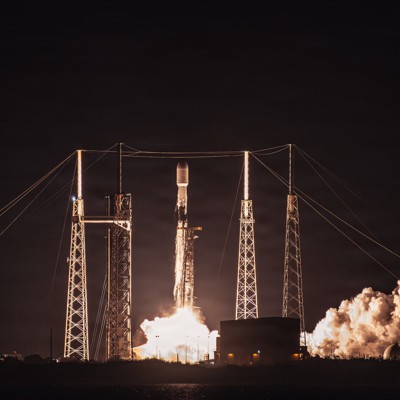
A Falcon 9 rocket carrying the GPS III-8 mission successfully launches from Space Launch Complex 40 at Cape Canaveral Space Force Station, Florida, on April 21, 2026. U.S. Space Force / Gwendolyn Kurzen CAPE CANAVERAL, Fla. — After decades of development, a rocket switch in March, and a last-minute weather delay, the U.S. Space Force finally launched the last satellite of the world’s most modern GPS system into orbit.The final GPS III space vehicle, known as SV-10, broke through the Florida skies and into the heavens aboard a SpaceX Falcon 9 rocket last month. The new satellite offers position data three times more accurate and eight times more jamproof than previous ones, according to the Space Force. For civilians, it means more precise road directions and better food delivery. For troops, it means more sophisticated targeting and higher-security communications in austere environments. It’s a no-fail mission that people—from parents getting their kids to soccer games to Air Force pilots in enemy airspace—are counting on, said Space Force Col. Stephen Hobbs, Combat Forces Command’s Mission Delta 31 commander.“We can talk about the captain of industry who owns a banking conglomerate and they want to make sure they have precise timing for
Lean: 0.050 · Source quality 55/100 · Factual vs opinion 75/100.
© 2026 Vistoa. All rights reserved.
Limited excerpts, attribution, analysis, and outbound publisher links remain core product boundaries.