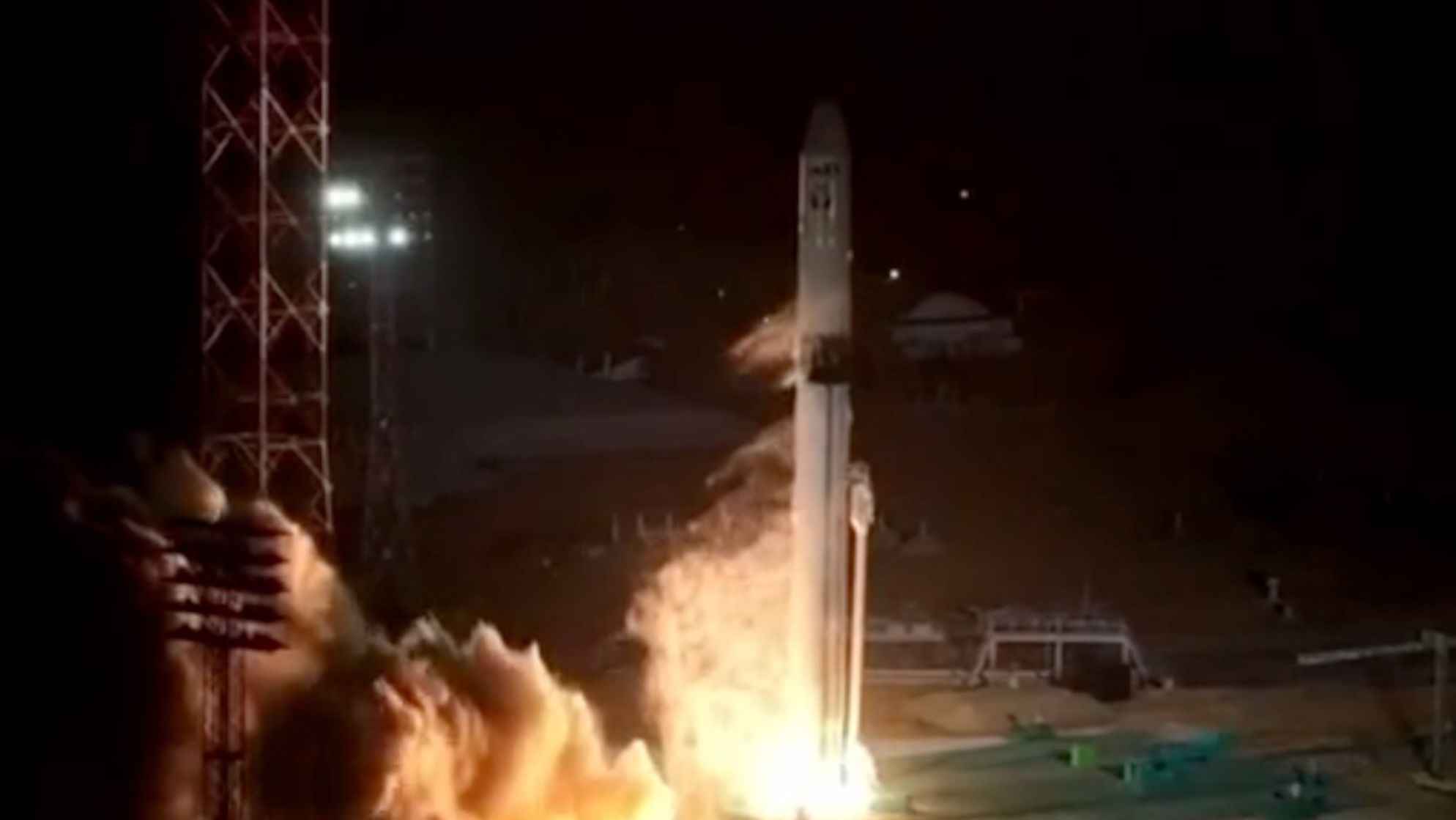
Russia's Soyuz 5 rocket launches on its first-ever mission, a suborbital test flight from Baikonur Cosmodrome in Kazakhstan on April 30, 2026. The flight was a success, according to Russian space officials. (Image credit: Roscosmos) Russia's new Soyuz 5 rocket has taken to the skies at long last.The Soyuz 5 lifted off for the first time ever on Thursday (April 30), rising off a pad at the Russia-run Baikonur Cosmodrome in Kazakhstan at 2:00 p.m. EDT (1800 GMT; 11:00 p.m. local time in Baikonur)."The first test launch of the new Soyuz 5 rocket was a success!" officials with Russia's federal space agency, known as Roscosmos, said via the Telegram app on Thursday."The first and second stages of Soyuz 5 performed as planned, and a mockup was launched onto the calculated suborbital trajectory, followed by a reentry into an area in the Pacific Ocean previously closed to shipping and aviation," they added in another Telegram post.Thursday's launch was a long time coming for the Soyuz 5, which has been in development since 2017. It "was designed to replace the medium-class Zenit vehicles built in Ukraine and provide Russia with a first-stage booster for [a] future super-heavy rocket," according to RussianSpaceWeb.com.Roscosmos originally
Lean: -0.100 · Source quality 60/100 · Factual vs opinion 75/100.
© 2026 Vistoa. All rights reserved.
Limited excerpts, attribution, analysis, and outbound publisher links remain core product boundaries.