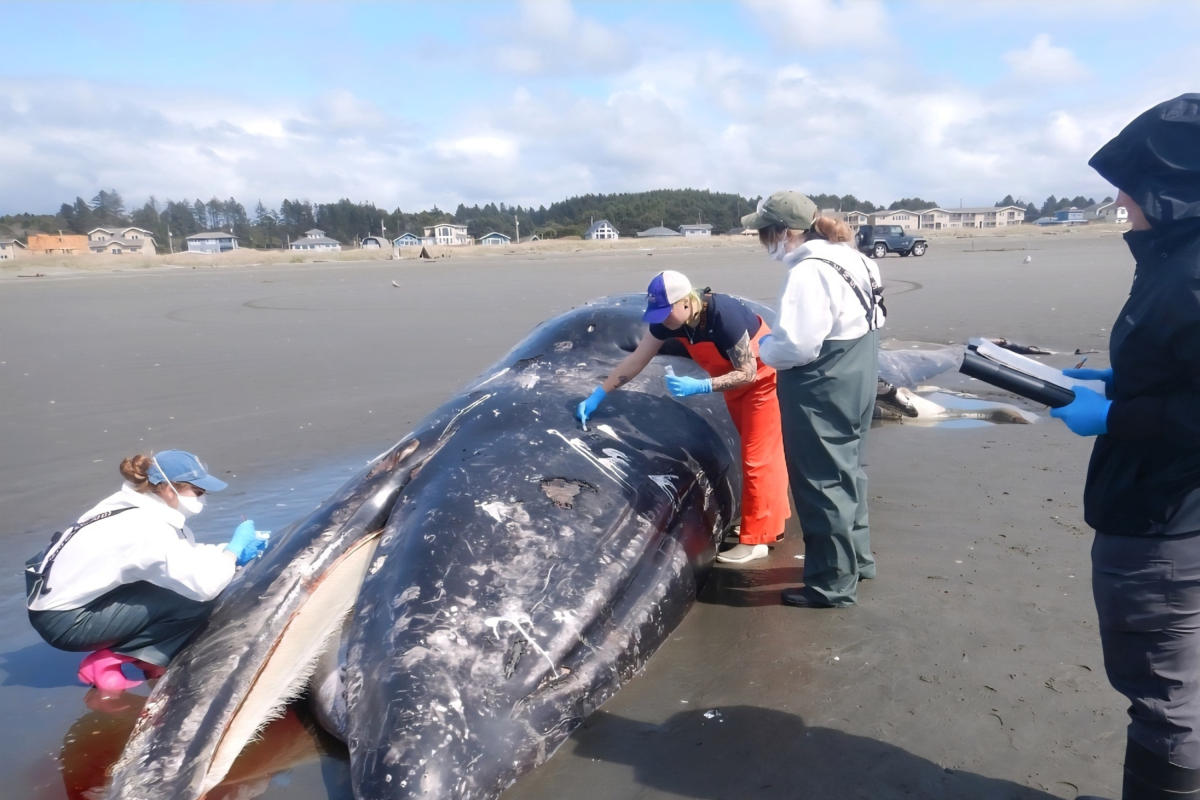
Dead gray whales are turning up along the Pacific Northwest at the highest rate in decades, with 16 strandings in Washington and multiple carcasses in Oregon this spring, a pattern researchers say reflects a collapsing Arctic food chain and worsening ocean conditions.Federal and regional researchers say the whales are arriving to the region with their fat reserves exhausted before they reach the midpoint of their annual migration from Baja to the Arctic."The alarmingly high number of gray whale strandings in Washington has continued throughout April," the Cascadia Research Collective wrote in a post on Facebook. "As we are still early in the stranding season, we anticipate there will be more."...What To KnowThe strandings are part of a broader, years‑long decline in the Eastern North Pacific gray whale population, according to researchers. Between 2019 and 2023, the population plummeted from roughly 27,000 to about 13,000 during a federally designated Unusual Mortality Event, according to a report from the Chinook Observer. Scientists noted signs of stabilization in 2024, but this spring’s strandings have renewed concerns the species remains vulnerable.Researchers say the whales’ struggles reflect deeper instability in the marine ecosystem. Their migration—one of the longest of any mammal—depends entirely on fat reserves
Lean: -0.150 · Source quality 70/100 · Factual vs opinion 80/100.
© 2026 Vistoa. All rights reserved.
Limited excerpts, attribution, analysis, and outbound publisher links remain core product boundaries.