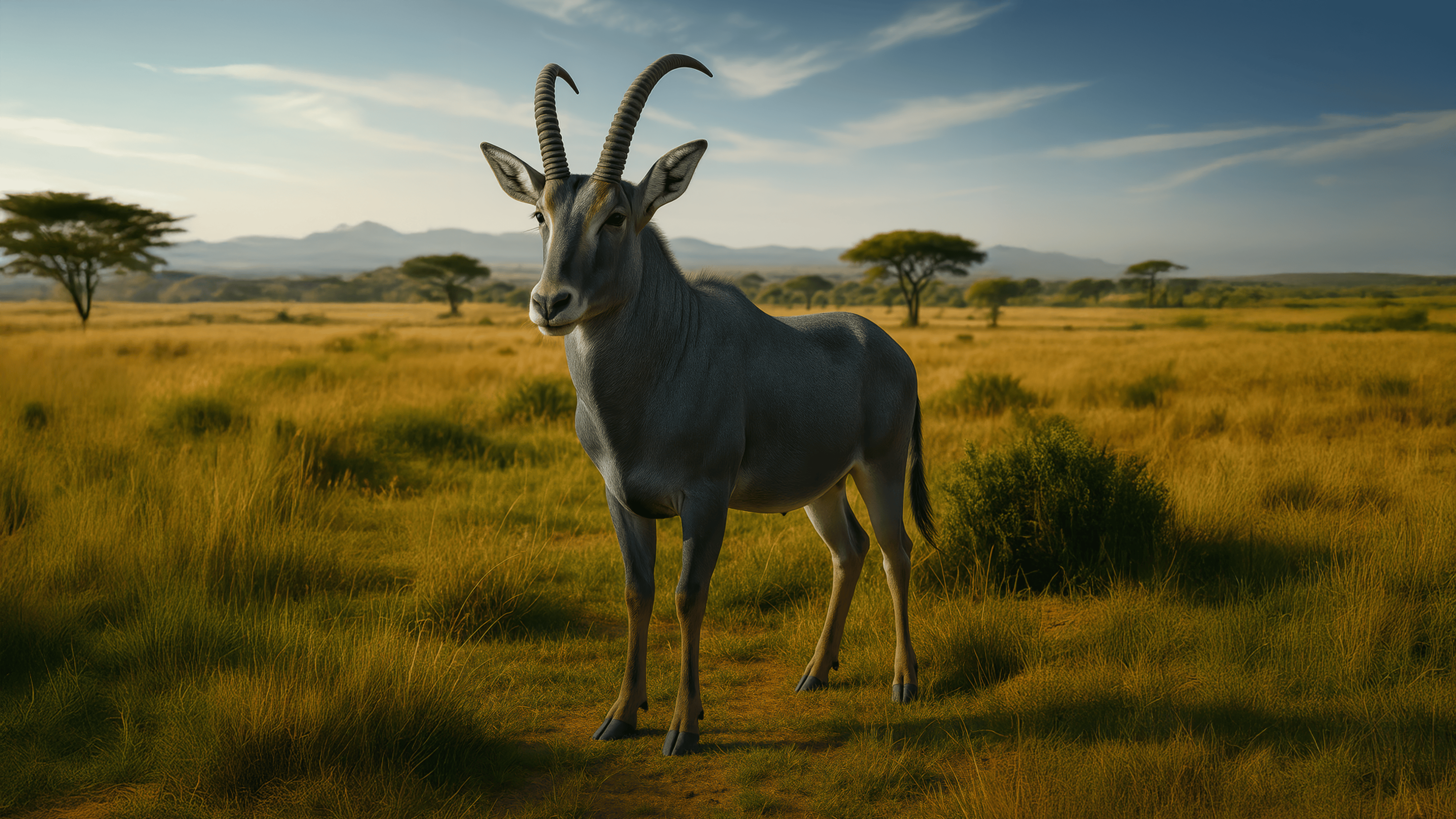
It’s been 226 years since humans last beheld a bluebuck—and we don’t know what we’ve been missing. The bluebuck was a species of antelope, but an especially elegant one—a trim, fleet beast, measuring about 4 ft. tall at the shoulders and 10 ft. from nose to rump, with long, sharp, backward curved horns measuring 22 inches from skull to point. Its belly was white and its face was brown, but the rest of the animal’s body was covered in a singular gray-blue coat. When it ran at its peak velocity of 50 miles per hour it resembled nothing so much as a speeding streak of pale blue sky.That blue pelt was irresistible to the European colonists who poured into the bluebuck’s native South Africa, and it took them only about 150 years—from 1650 to 1800—to hunt the animal to extinction. Today the bluebuck exists only in drawings from the naturalists who saw it while it lived, and in stray specimens in science museums. Now, however, the bluebuck may be on its way back, thanks to Colossal Biosciences, the company that last spring made headlines with the news that it had de-extincted the dire wolf, which last walked the Earth more
Lean: n/a · Source quality n/a · Factual vs opinion n/a.
© 2026 Vistoa. All rights reserved.
Limited excerpts, attribution, analysis, and outbound publisher links remain core product boundaries.