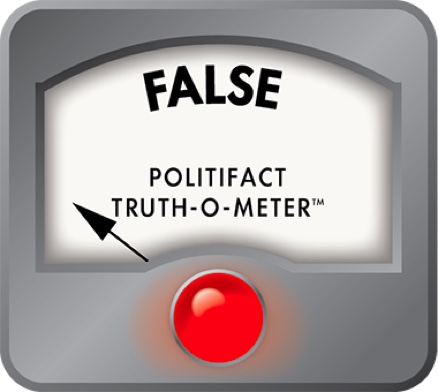
Florida's Republican-controlled Legislature approved a new congressional map that could help the GOP flip four seats in the midterm elections. State Democrats say the map, put forward by Gov. Ron DeSantis, conflicts with Florida’s Fair Districts amendment prohibiting drawing districts with partisan intent. DeSantis has offered several reasons for the changes, including population growth. Florida House Democratic Leader Fentrice Driskell, D-Tampa, went further, saying after the April 29 vote that it was not only illegal on a state level, but also federal. "Even if Fair Districts falls, you still have general principles of map drawing, and you still have, under federal law, you cannot engage in partisan gerrymandering," Driskell told reporters. "It would not be OK to draw that map based on partisan data." Gerrymandering is drawing district boundaries to give one political party, incumbent or group an advantage. No federal law says states cannot undertake partisan gerrymandering. The U.S. Supreme Court ruled in 2019 that partisan gerrymandering claims are "political" questions that federal courts can’t answer. "The court ruled the matter ‘nonjustiable’ by federal courts," said Rick Hasen, a UCLA School of Law election law expert. "It recognized the argument that partisan gerrymandering could be unconstitutional but it wasn’t
Lean: -0.100 · Source quality 85/100 · Factual vs opinion 85/100.
© 2026 Vistoa. All rights reserved.
Limited excerpts, attribution, analysis, and outbound publisher links remain core product boundaries.