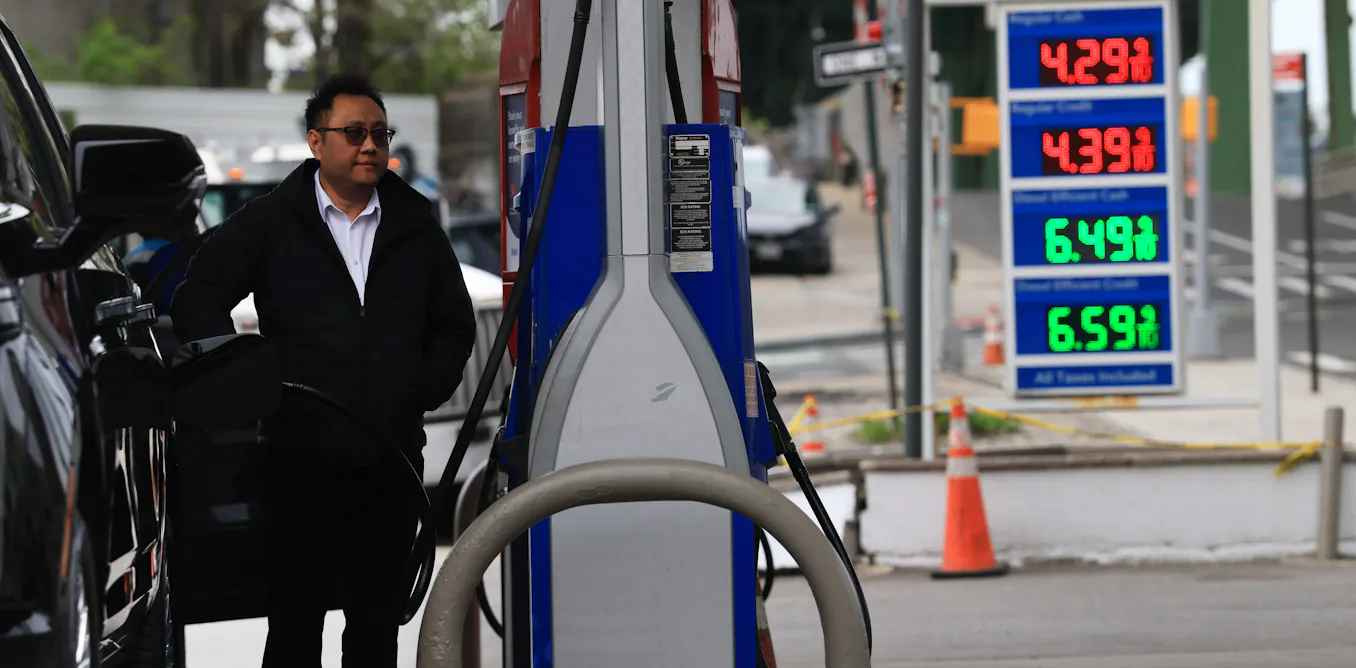
The U.S. Energy Information Administration expects nationwide retail gasoline prices to average near US$4.30 a gallon for April 2026 – the highest monthly average of the year. The political response has been familiar. Georgia has suspended its state gas tax, other states are weighing their own tax holidays, and the White House has issued a temporary waiver of a law known as the Jones Act in hopes of moving more domestic fuel to East Coast ports. As an energy economist, I am often asked about what contributes to gas prices and what different policies can do to affect them. The price of a retail gallon of gas is the sum of four things: the cost of crude oil, refining, distribution and marketing, and taxes. In nationwide figures from January 2026, crude oil accounted for about 51% of the pump price, refining roughly 20%, distribution and marketing about 11% and taxes about 18%. That mix shifts with conditions: When crude oil prices spike, that can drive more than 60% of the price; when the price drops, taxes and logistics are larger shares of the cost. Crude oil is the biggest ingredient Because the price of crude oil is the largest element,
Lean: -0.050 · Source quality 80/100 · Factual vs opinion 80/100.
© 2026 Vistoa. All rights reserved.
Limited excerpts, attribution, analysis, and outbound publisher links remain core product boundaries.