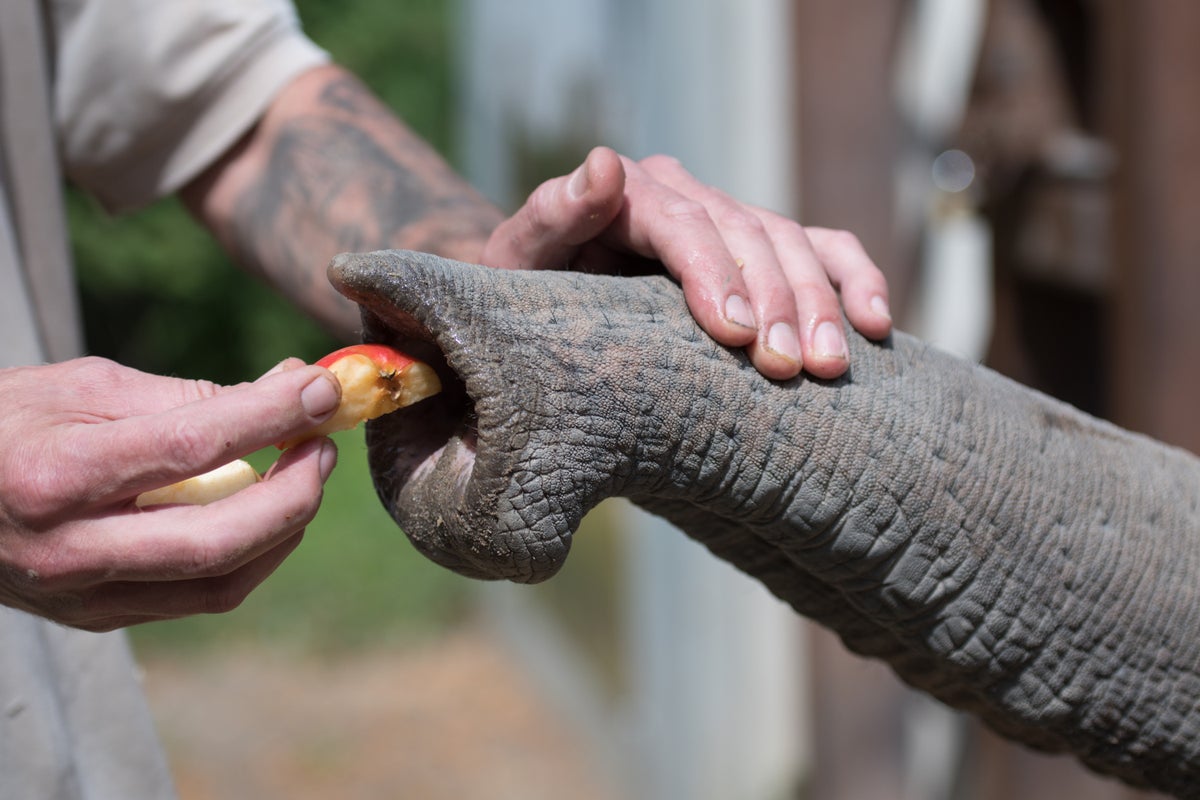
February 12, 20263 min read Add Us On GoogleAdd SciAmPachyderm whiskers are more flexible at the tip than at the base, allowing elephants to complete delicate tasks with their incredibly strong trunkBy K. R. Callaway edited by Tanya Lewis & Sarah Lewin FrasierZookeeper feeling an elephant's whiskers. Heidelberg Zoo & Alejandro Posada, Max Planck Institute for Intelligent SystemsWatching an elephant forage for roots reveals both the strength and the sensitivity of its trunk. With more than 40,000 muscles, an elephant’s trunk can upend a tree and then gently collect the fragments that fell. It takes baby elephants nearly a year to master using their trunk in this way, and it’s taken humans even longer to understand how they’re able to do it. The secret may come down to elephants’ whiskers.Researchers who analyzed the whiskers lining these animals’ trunks have discovered a unique structural property that helps elephants sense the world around them and determine whether a task calls for strength or sensitivity. In a study published in Science, the authors show that elephants’ whiskers—unlike the whiskers of other mammals—are more flexible at the tip and stiffer closer to the skin.This observation helps scientists better understand elephants’ “umwelt,” or their individual
Lean: n/a · Source quality n/a · Factual vs opinion n/a.
© 2026 Vistoa. All rights reserved.
Limited excerpts, attribution, analysis, and outbound publisher links remain core product boundaries.